Professional Barrier Gate & Parking Solutions | Baroxon®

What Is an Automatic Parking Barrier and How Does It Work?
Release time:
2026-11-02
Introduction: A Barrier Arm Is Only One Part of the System
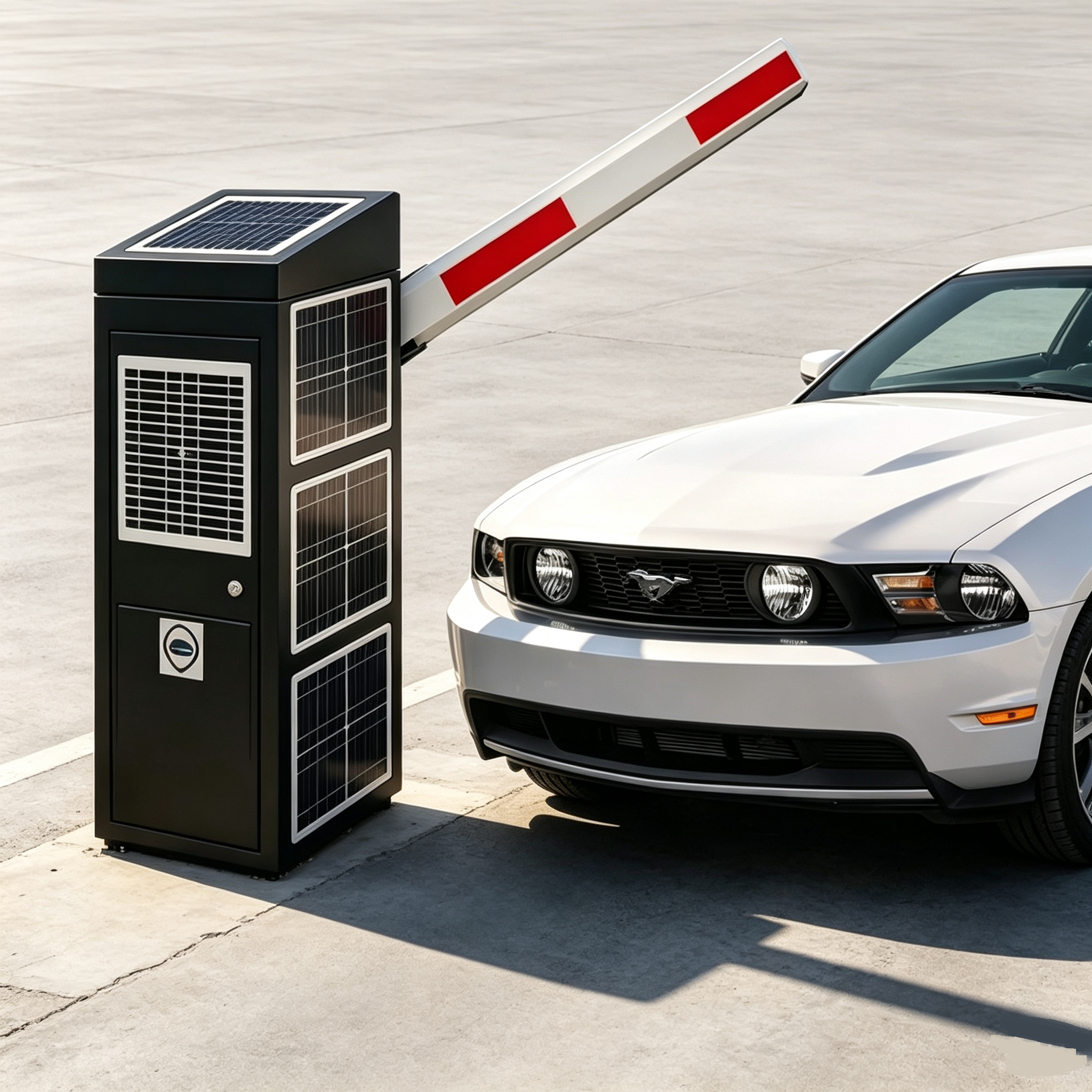
An automatic parking barrier is a vehicle access control system that uses a motorised barrier arm to manage the entry and exit of cars, motorcycles and commercial vehicles at a controlled location. When the system verifies that a vehicle is allowed through, the arm lifts. After the vehicle has passed and the lane is confirmed clear, the arm lowers again according to the settings in the controller.
In Malaysia this type of system is used at condominiums, apartments, offices, shopping centres, factories, warehouses, gated communities and paid car parks. The same product is described in several ways: automatic parking barrier, boom barrier, boom gate, barrier gate and parking barrier gate. The name changes between suppliers and between English and Malay usage, but the function is the same.
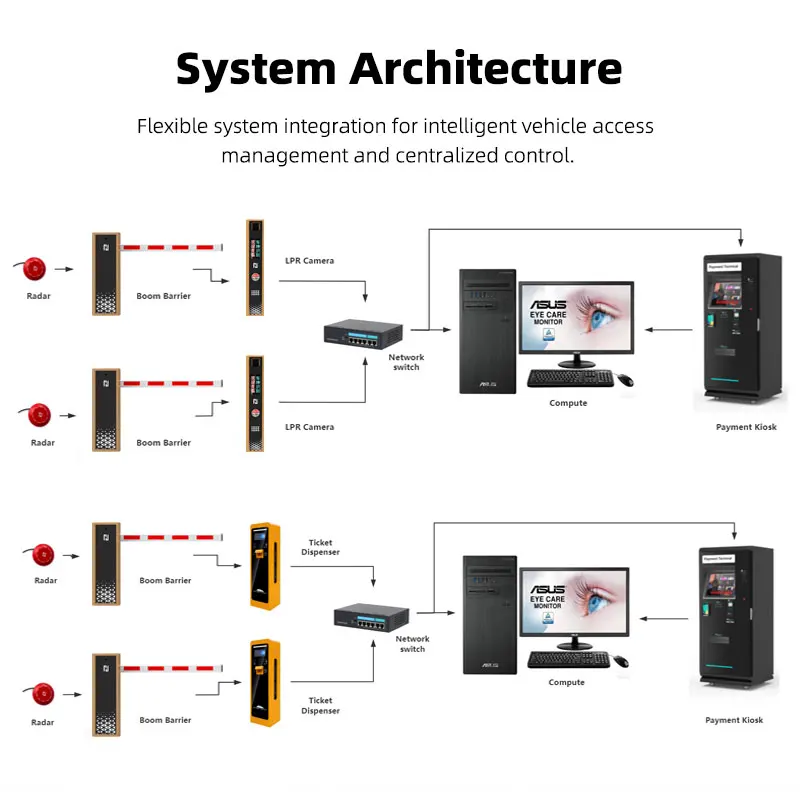
A barrier on its own only blocks and releases a lane. Most modern installations also include an access reader, a detection device and some form of management software. BAROXON supplies boom barriers, high-speed barrier gates, automatic RFID boom barriers, ALPR/LPR plate recognition systems, radar sensors and related accessories that can be combined to suit a specific site. You can review the full range on the BAROXON barrier gate and parking access product page before deciding on a configuration.
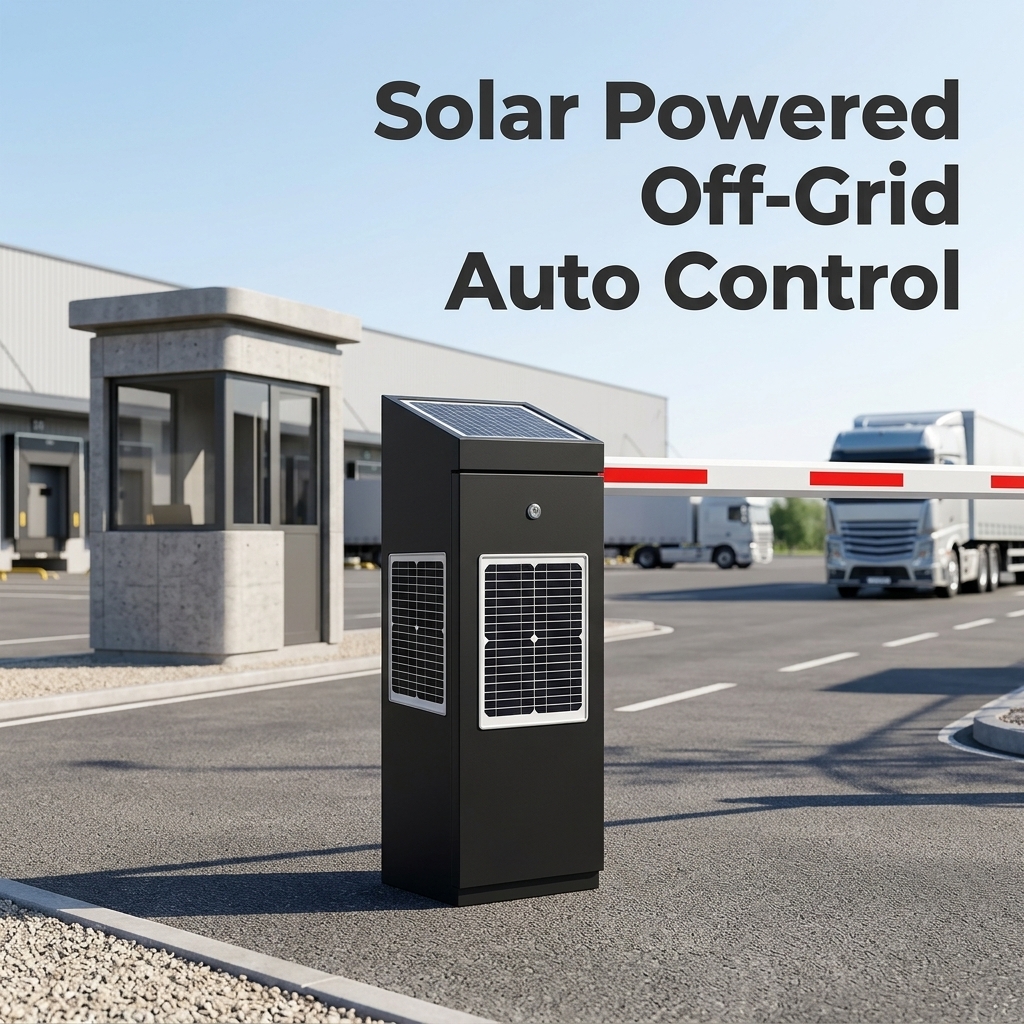
1. Key Components of an Automatic Parking Barrier
A working system is made up of several parts that must be matched to each other. The exact configuration depends on the model, the way vehicles are detected, the access method and the parking software in use.
1.1 Cabinet and drive unit
The cabinet houses the motor, the gear mechanism, the control board and the electrical components. The drive unit converts motor power into mechanical movement that raises or lowers the arm. BAROXON lists DC brushless, AC and servo motor options on selected models and configurations. The motor type should be matched to the opening speed, the number of movements per day and the conditions at the site.
1.2 Barrier arm
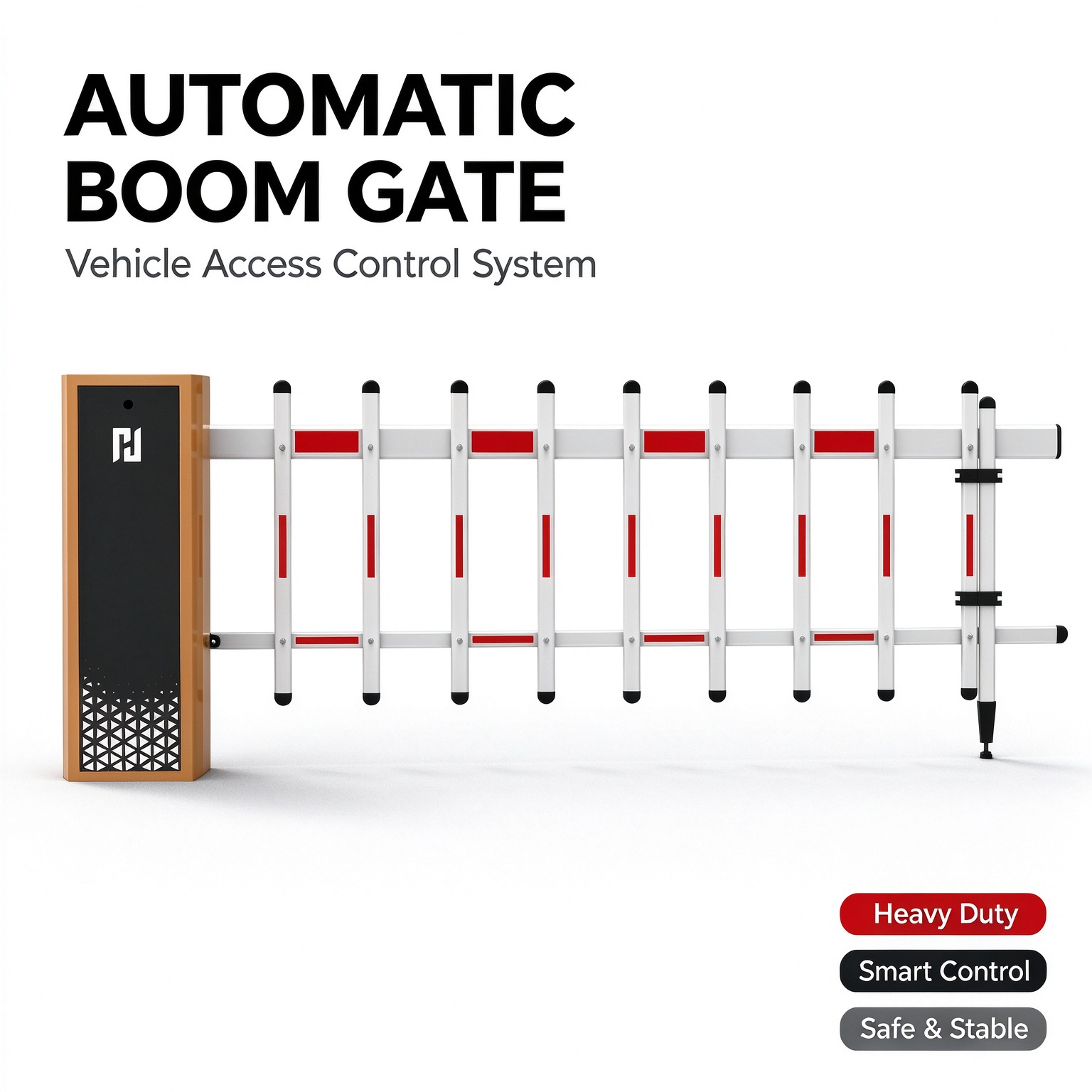
The arm is the part that physically spans the vehicle lane. Available options include straight arms, folding arms and fence arms for particular layouts. Arm length, clearance above the lane, lane width and mounting conditions all need to be checked before a model is selected.
1.3 Control board
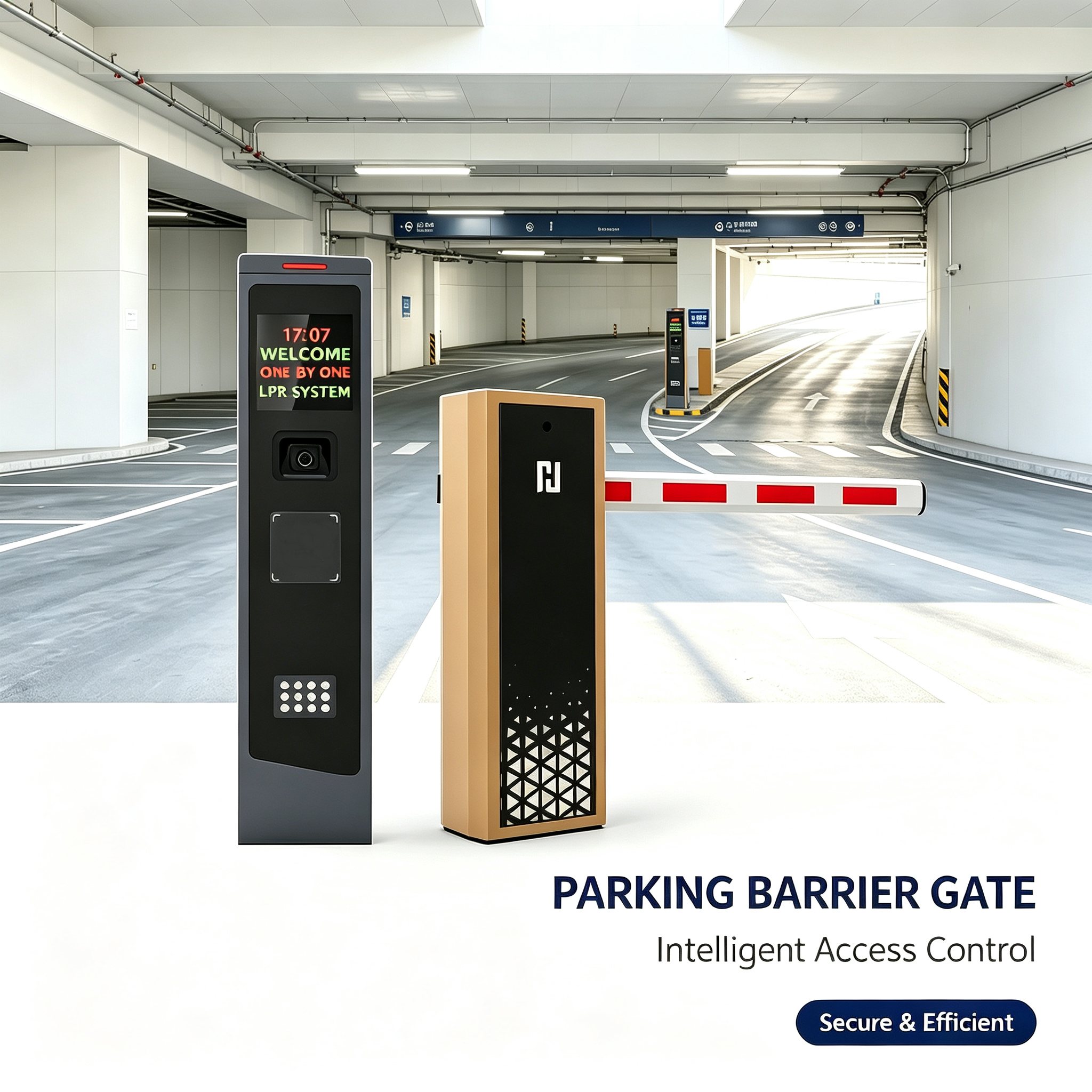
The control board receives commands from a card reader, remote control, ANPR/LPR system or parking software. It drives the motor, manages travel limits and open/close timing, and accepts input from safety devices. Communication interfaces depend on the model; BAROXON product pages state options such as dry contact relay, RS485 and TCP/IP on configurations that support them.
1.4 Access verification devices
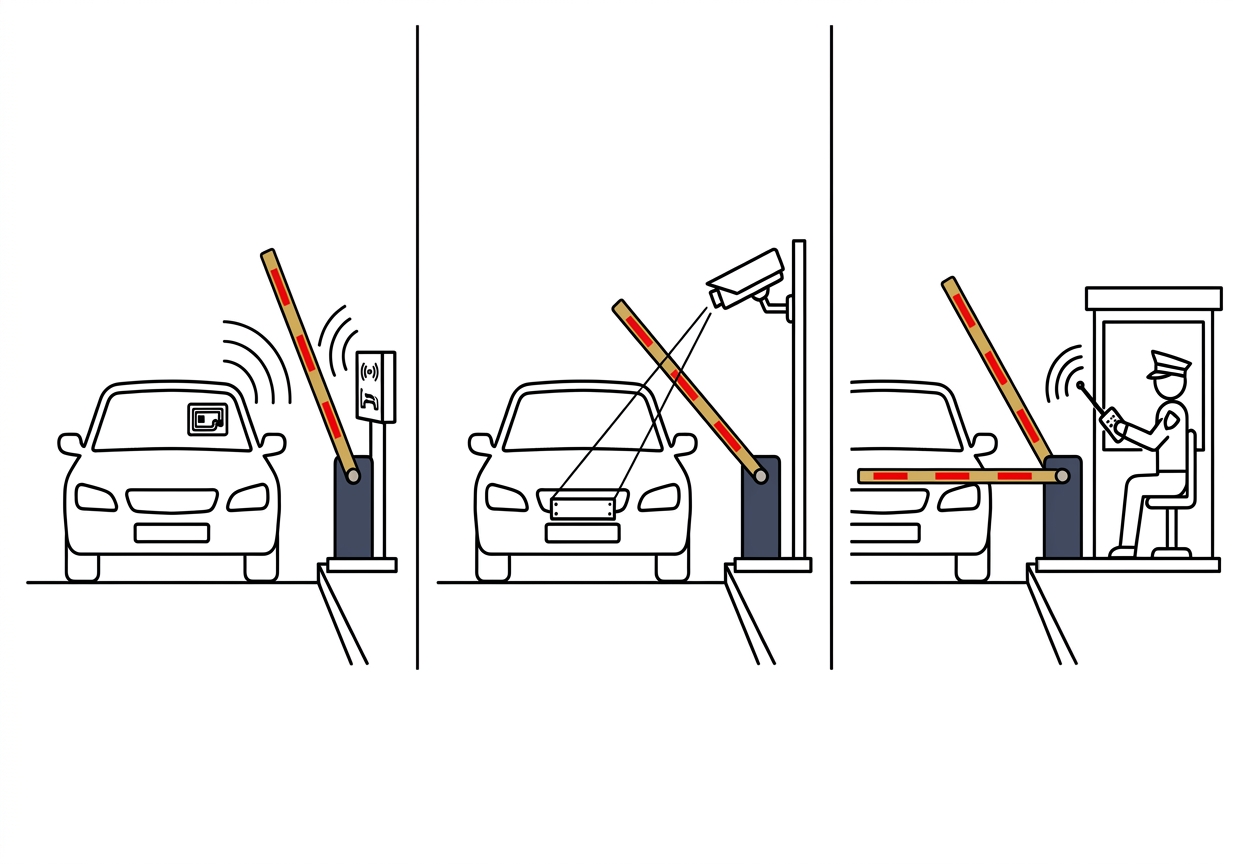
Permission to enter can be verified by an RFID or IC card, a UHF tag, a QR code, a remote control, a keypad or ANPR/LPR plate recognition, depending on what is installed. For repeat users such as residents or staff, registered cards and tags keep administration simple. For sites that want less manual handling, ANPR/LPR can read the registration number and check it against an authorised vehicle list.
1.5 Detection and safety sensors
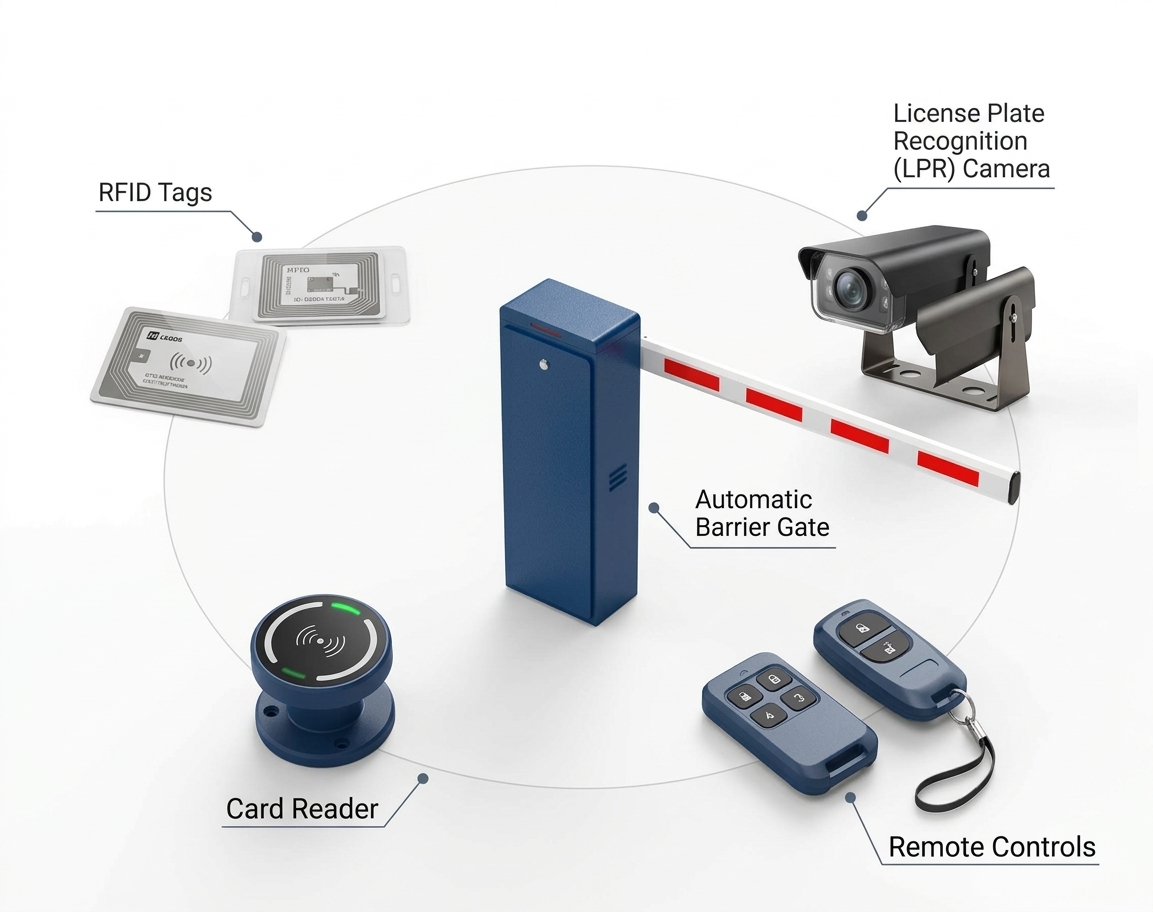
Inductive loop detectors, radar and photocells detect whether a vehicle is present or still inside the movement zone, and help reduce the risk of the arm lowering while the lane is not yet clear. Sensor type and safety logic must be chosen for the lane layout, vehicle speed and controller compatibility. Do not assume that every model includes the same sensors as standard.
2. How an Automatic Parking Barrier Works
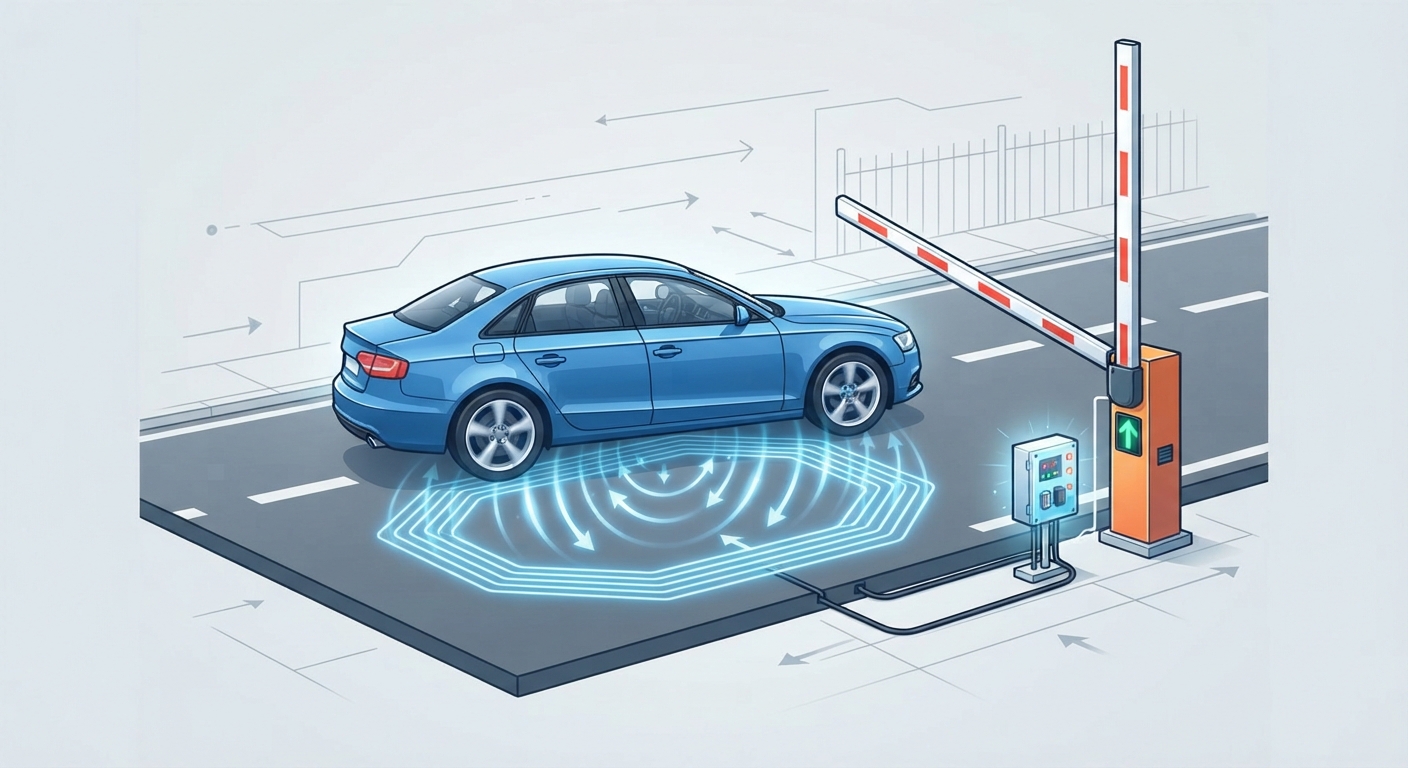
Installation details vary from site to site, but the basic operating sequence is usually the same.
- A vehicle approaches the lane. The driver stops at the marked position or moves slowly into the detection zone.
- The system detects the vehicle. An inductive loop, radar or another detection device registers the vehicle according to the lane configuration.
- Identity or access rights are checked. An RFID or UHF reader reads the card or tag; an ANPR/LPR system captures an image and reads the registration number where that function is installed.
- The controller processes the open command. If the access record is valid and the safety conditions are met, the controller sends a command to the drive unit.
- The arm lifts. The motor drives the mechanism until the arm reaches its open position.
- The vehicle passes through. Sensors monitor whether the vehicle is still inside the lane zone.
- The arm lowers once the lane is clear. When the controller confirms that the lane is free and no obstruction is detected, the arm closes according to its settings.
3. Common Access Control Methods
RFID and IC cards
Registered users present a card or tag to a reader. This suits gated communities, office buildings and season parking, where each user can be given an individual credential that can be cancelled when needed. Read range depends on the reader, the tag, the antenna position and the surrounding environment.
Long-range UHF
A UHF reader can read a vehicle tag from a greater distance than a standard proximity card, subject to the reader specification and how it is installed. This reduces the need for the driver to wind down the window or tap a card at close range, which helps at busy residential and staff entrances.
ANPR and LPR plate recognition
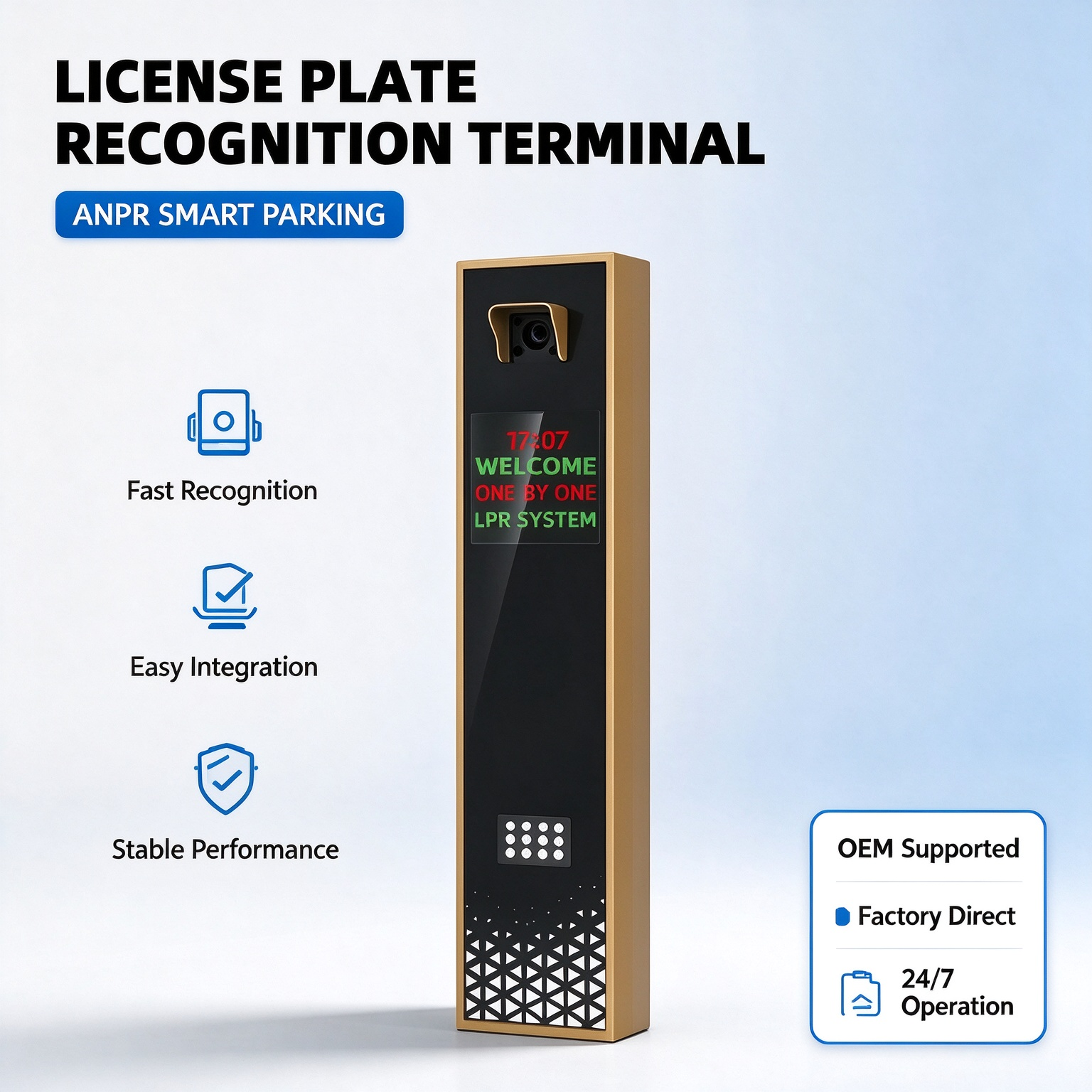
An ANPR/LPR camera captures an image of the number plate. Recognition software converts the image into characters and compares the result with an allowed list, a block list or a transaction record. Real performance depends on the camera, lighting, mounting angle, plate condition, vehicle speed and software.
Remote control, QR code and ticket systems
A remote control is useful for guards and authorised staff. QR codes and ticket systems suit visitors or car parks that charge by parking duration, provided the barrier is integrated with the parking management software.
4. Types of Parking Barrier to Consider
Straight arm barrier
The straight arm is the most common choice where there is enough vertical clearance above the lane. It suits general car park entries, commercial buildings and industrial sites, and is available across a wide range of arm lengths.
Folding arm barrier
A folding arm is worth considering where headroom is limited, for example under a low ceiling or a building structure that crosses the lane. Measure the actual space and check the folded geometry before ordering.
High-speed barrier gate
High-speed models are considered for lanes with heavy traffic, subject to duty cycle, arm length, arm weight and the specification of the model. Speed alone is not a good selection criterion; safety devices, operating capacity and compatibility with the detection system matter just as much.
Fence barrier
A fence arm provides a stronger physical barrier across the opening and is used at sites where a simple boom is not considered sufficient. Installation space, wind loading and site safety requirements should be assessed by the project team.
5. Safety Features That Matter
Because the arm moves across a vehicle lane and may be close to pedestrians, safety has to be designed in rather than assumed.
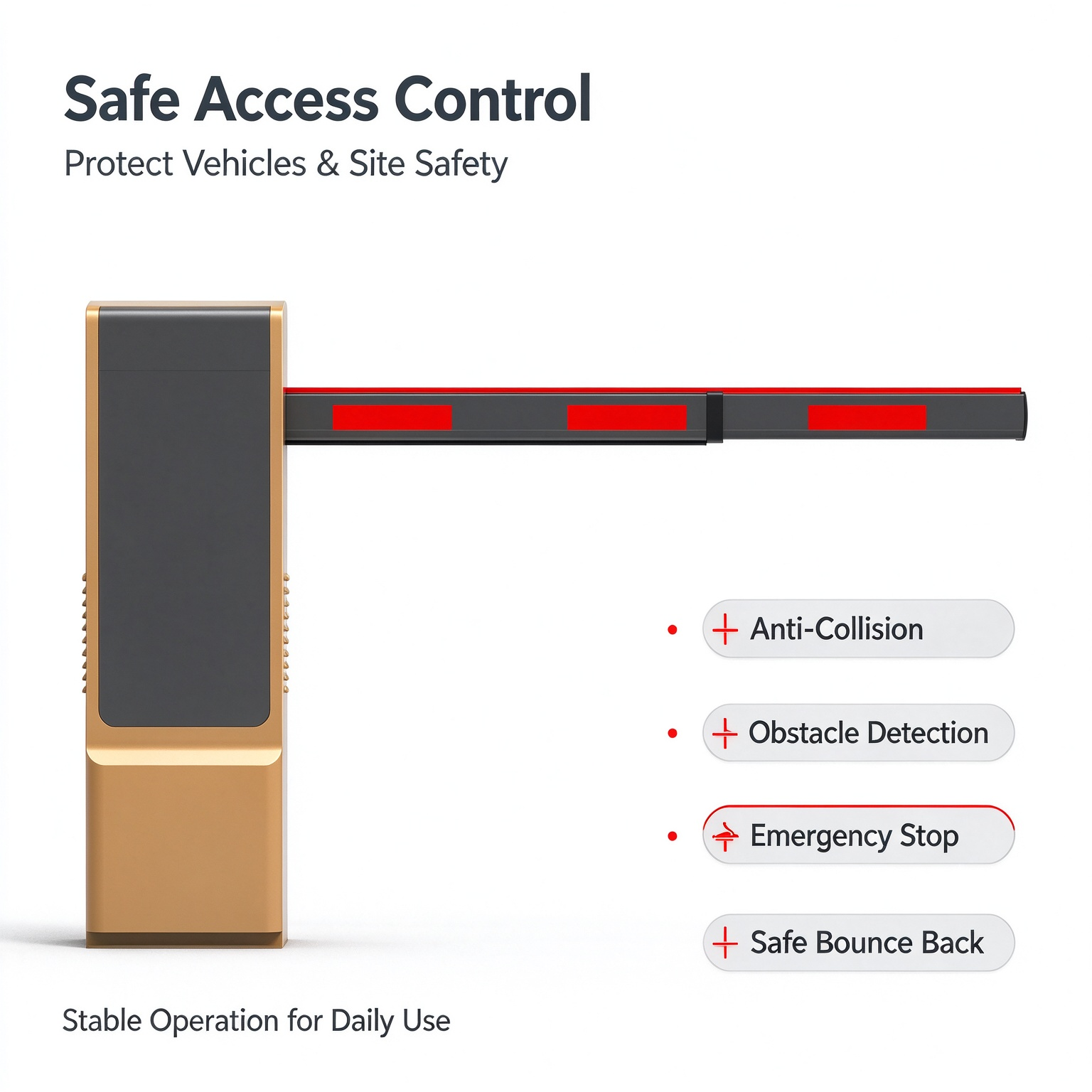
- Obstacle detection and auto-reverse. Where supported by the model and configuration, the barrier can stop or reverse when an obstruction is detected during closing.
- Photocell or safety sensor. A beam across the lane detects objects that enter the detection area. Position and coverage must be planned for the actual lane.
- Inductive loop or radar. These confirm that a vehicle is still present and help decide when it is safe to close the arm.
- Manual release. Check whether the chosen model has a manual release mechanism or a defined emergency operating method for use during a power failure.
- Signage and lane control. Clear warning signs, a stop line, adequate lighting and, where needed, a separate pedestrian route all reduce risk during daily operation.
BAROXON states features such as auto-reverse, photocell support and manual clutch release on particular product pages. Always check the datasheet of the exact model being purchased to confirm that these features are included in the ordered configuration.
6. Where Automatic Parking Barriers Are Used in Malaysia
Condominiums and gated communities
Barriers with RFID, UHF or ANPR/LPR help manage resident, visitor and contractor access. The management body can define registration rules and access rights according to the building policy, and remove a credential when a resident moves out.
Office buildings and commercial centres
Barriers are commonly integrated with staff cards, visitor passes and parking software so that peak-hour flow and entry records can be managed together.
Factories, warehouses and logistics centres
For lanes used by lorries and delivery vehicles, selection has to consider operating frequency, arm length, turning space and a detection method that suits the site. A 24-hour operation also needs a realistic maintenance plan.
Public car parks and shopping centres
A combination of boom barrier, ANPR/LPR, RFID readers and a ticket or payment system can form a complete parking management solution. Payment and transaction records require suitable software integration; the barrier alone does not provide those functions.
7. How to Choose the Right Barrier
Before ordering, work through the following points with the supplier so that the quotation matches the site rather than a generic catalogue page.
| Item to confirm | What to check |
|---|---|
| Lane width | Measure the actual opening and match it to a suitable arm length. |
| Clearance | Confirm the arm can move without hitting a ceiling, sign or structure. |
| Traffic volume | Estimate vehicles per hour and the number of movements per day. |
| Speed | Match opening and closing time to traffic flow without compromising safety. |
| Motor type | Check whether the model offers DC brushless, AC or servo drive. |
| Access method | Decide between RFID, UHF, ANPR/LPR, QR code or remote control. |
| Safety sensors | Confirm sensor type, mounting position and controller compatibility. |
| Integration | Check which of dry contact, RS485, TCP/IP or other protocols the model supports. |
| Environment | Check the IP rating and cabinet finish for the installation location. |
| After-sales support | Confirm manuals, spare parts, technical support and warranty terms. |
As an example of how options are listed, the BAROXON YH-PDPY601 product page states 24V DC brushless, AC and servo motor options, straight, folding and fence arm types, an arm length of 1 to 6 metres depending on configuration, and speed and protection options that vary by configuration. Figures such as 0.6 s, 0.9 s, 1.5 to 6 s and IP54, IP65 or IP66 apply to the configurations listed for that model, not to every BAROXON barrier. Confirm the final specification with the technical team before placing an order.
8. Basic Maintenance
Regular checks keep the system reliable and reveal wear before it causes a failure. The inspection interval should follow the model manual and the actual intensity of use.
- Inspect the arm, joints, bolts and mounting base for looseness or damage.
- Clean the cabinet and confirm that drainage and sealing are not blocked.
- Test open and close operation, travel limits and manual release following the manufacturer procedure.
- Test the photocell, loop detector, radar or other safety devices that are installed.
- Check cables, terminals, power supply and communication connections.
- Record faults, servicing and component replacements for future reference.
Internal inspection, spring or drive adjustment and electrical repair should be carried out by a qualified technician. Never touch a moving arm, and never open the cabinet without isolating the power supply according to the site safety procedure.
9. Frequently Asked Questions
What is the difference between an automatic parking barrier and an automatic gate?
A parking barrier normally uses a boom arm that lifts and lowers to control a vehicle lane. An automatic gate usually moves a sliding or swinging leaf to close a wider opening. The choice depends on the entrance design, the level of security required and the space available for installation.
Can a barrier work with both RFID and ANPR/LPR?
Yes, integration is possible when the controller, readers and software are compatible. BAROXON lists configurations that support RFID or UHF and ANPR/LPR cameras. Confirm the interface type and the supported device list for the specific model.
Is a boom barrier suitable for a condominium in Malaysia?
It is commonly used at condominium entrances to manage resident and visitor access. RFID, UHF or ANPR/LPR can be selected according to vehicle volume, the registration process and the building management policy.
What arm length should I choose?
Arm length depends on lane width, available mounting space, arm type and the specification of the model. Measure the actual site and obtain technical confirmation before ordering, because an arm that is too long for the drive unit will affect reliability.
Can the barrier be operated during a power failure?
Behaviour during a power failure depends on the model and configuration. Some products provide a manual clutch release or a defined emergency operating method. Check the manual and emergency procedure for the model being purchased; do not assume that all units behave the same way.
Does a parking barrier need maintenance?
Yes. The arm, cabinet, motor, sensors, cables and safety functions should be checked according to the manufacturer schedule and the intensity of use. Regular servicing helps find problems before they interrupt traffic.
What information is needed for a quotation?
Provide the lane width, vehicle types, estimated daily vehicle count, required arm length, preferred access method, sensor requirements, installation conditions and any integration needed with an existing parking system.
Conclusion
An automatic parking barrier is more than a motorised arm. It is a vehicle access system that combines a drive unit, a controller, a method of verifying users and a set of safety sensors. When those parts are matched to the site, a building operator can manage vehicle flow in a more orderly way and keep tighter control over who enters and leaves.
BAROXON offers boom barriers, high-speed barrier gates, automatic RFID boom barriers, ALPR/LPR plate recognition systems and radar sensors. To get a configuration recommendation, share your lane details and operating requirements so that the model, arm length, access method and sensors can be matched to your project.
Latest News
Professional Barrier Gate & Parking Solutions | Baroxon®
Advanced Security Access Control and Intelligent Parking Solutions.
Company Strength
Adequate Inventory
Fast Shipping
Our Products
CONTACT US
Address: No.2 Wanshou Rd, Int'l Innovation Ind. Park, Jinan, Shandong


© COPYRIGHT 2025 Professional Barrier Gate & Parking Solutions | Baroxon®



Contact Us
Professional Manufacturer of Vehicle Barriers & License Plate Recognition Cameras,Smart Parking Access Control Solutions for Global Clients,Reliable Barrier Gates + LPR Systems, Customized to Your Project,From residential communities, commercial shopping malls, industrial parks to highway toll stations, our matched barrier & LPR sets can realize automatic license plate identification, automatic gate lifting, real-time access records, automatic charging and remote management.