Baroxon® | Leading Boom Barrier Manufacturer

How to Compare Parking Barrier Manufacturers and Suppliers
Release time:
2026-10-30
Choosing the right parking barrier manufacturer and supplier is not just a matter of comparing the price per unit. A boom barrier system is part of the vehicle access control infrastructure. Its performance can affect entrance safety, traffic flow, the user experience and the maintenance cost over the life of the system. Buyers in Malaysia therefore need to assess technical capability, manufacturing quality, system compatibility and after-sales support before making a decision.
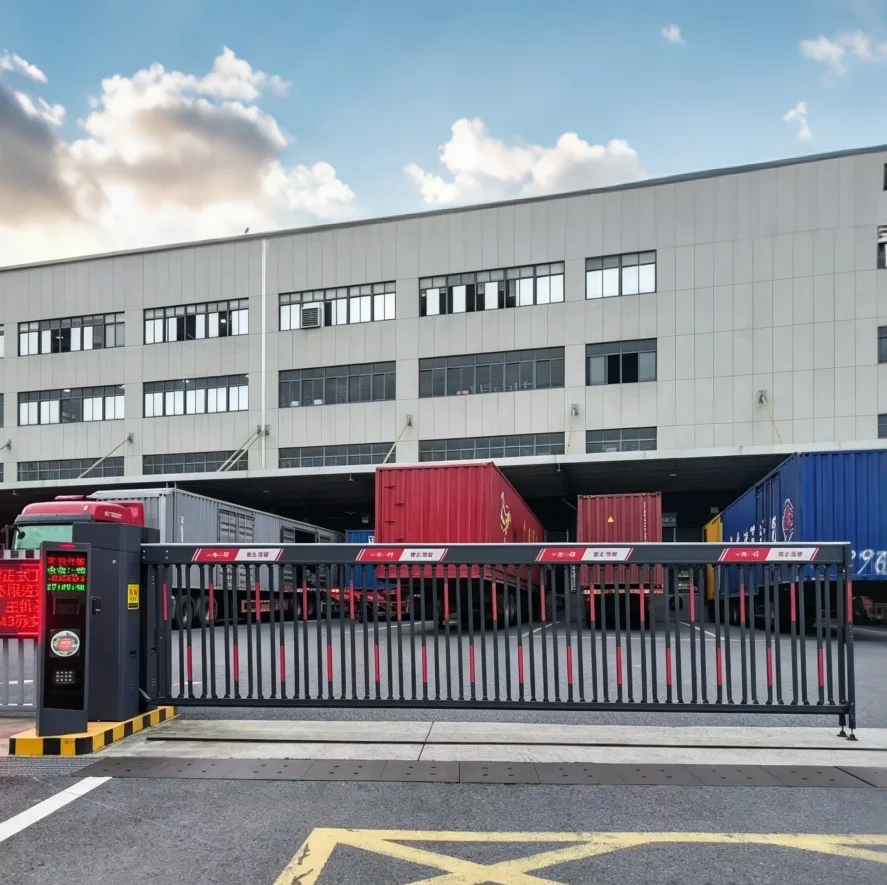
1. Distinguish Between Manufacturer, Distributor and System Integrator
The first step is to understand the role of the party offering the product. A manufacturer controls the design, the production process and the hardware configuration, and usually has direct access to spare parts and product engineers. A distributor markets or supplies products from one or several brands. A system integrator is responsible for combining the boom barrier with ANPR/LPR cameras, RFID readers, payment systems, parking software and the building network.
No single procurement model suits every project. If the project needs a special arm length, custom integration or a large quantity, dealing directly with the manufacturer may allow more room for customisation. If the priority is local installation and on-site response, a local supplier or integrator with experienced technicians may be more suitable. Ask each party to explain their scope of responsibility in writing.
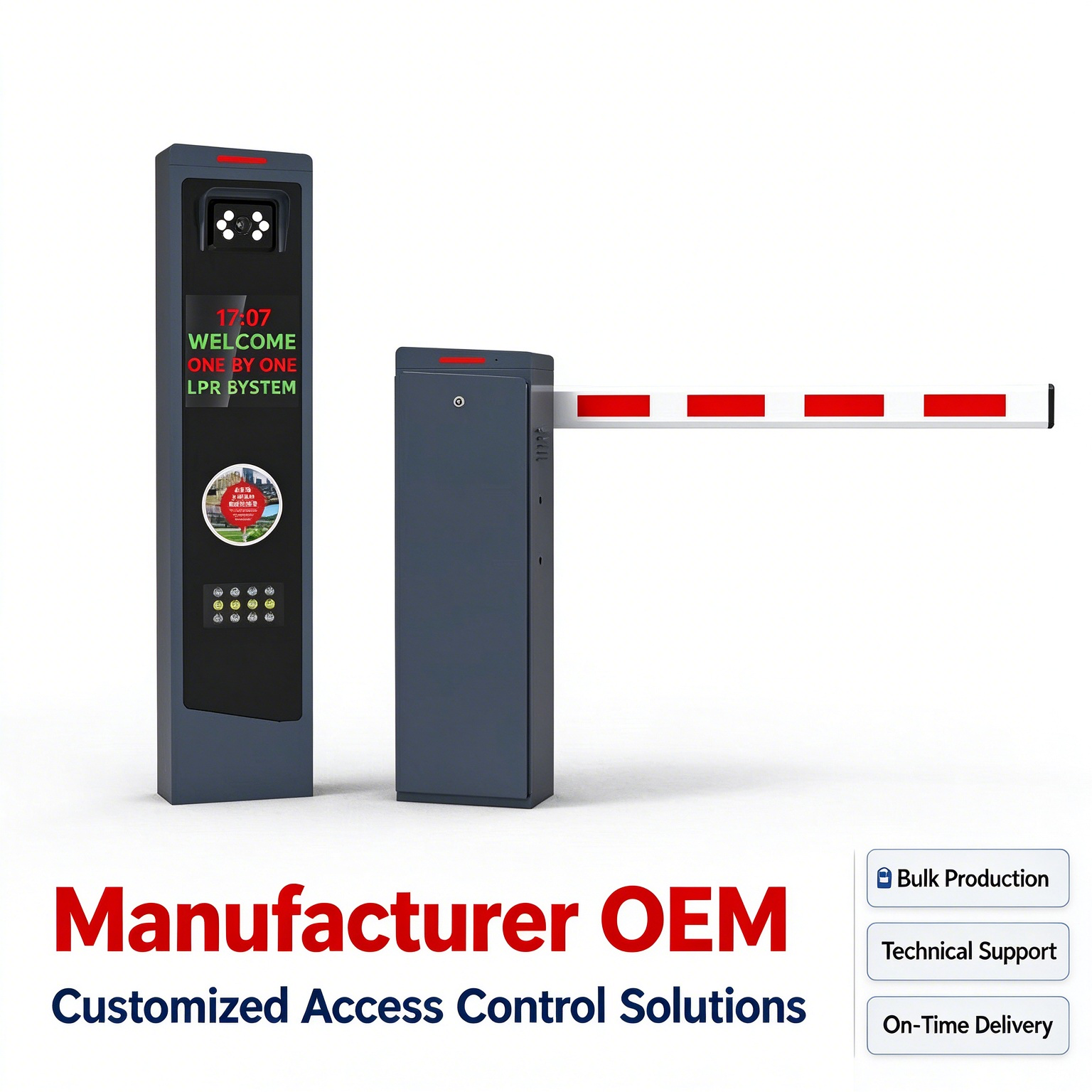
2. Check the Factory Capability and Quality Control
Do not rely on marketing statements such as "own factory" or "premium quality" without evidence. Ask whether the company has its own production facility, an R&D team, a standard assembly process and a pre-delivery inspection procedure. Useful evidence includes photographs or video of the production line, test records, inspection checklists, model numbers and quality control documents.
For an automatic parking barrier, the inspection process should cover open and close operation, motor stability, controller response, obstruction detection, the condition of the arm and cabinet, and the communication test if the system includes RFID or ANPR. Ask the supplier to explain whether every unit is tested or only a sample from each batch. Also check how a defect is identified, recorded and handled before the product is shipped.
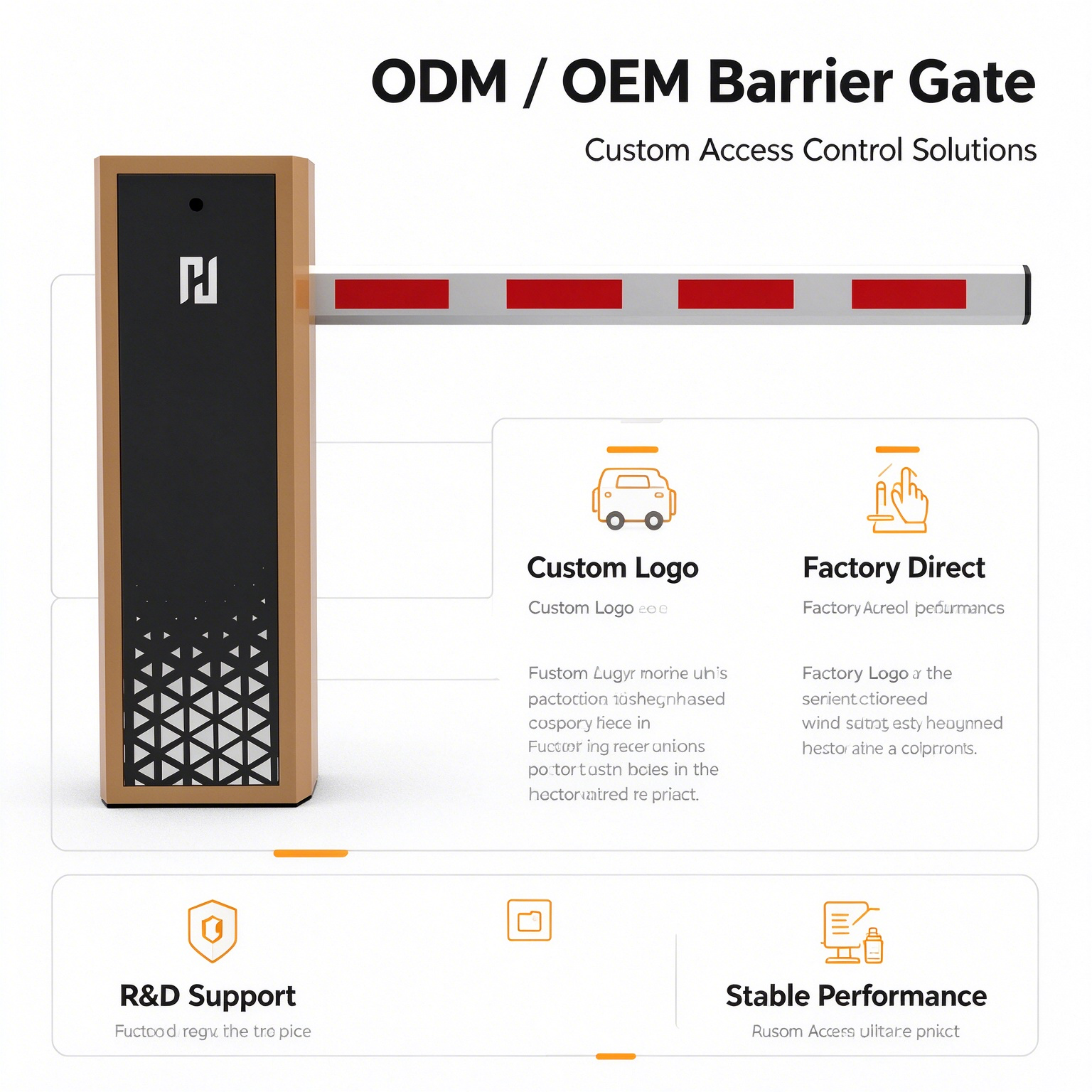
3. Compare Technical Specifications, Not Just Product Names
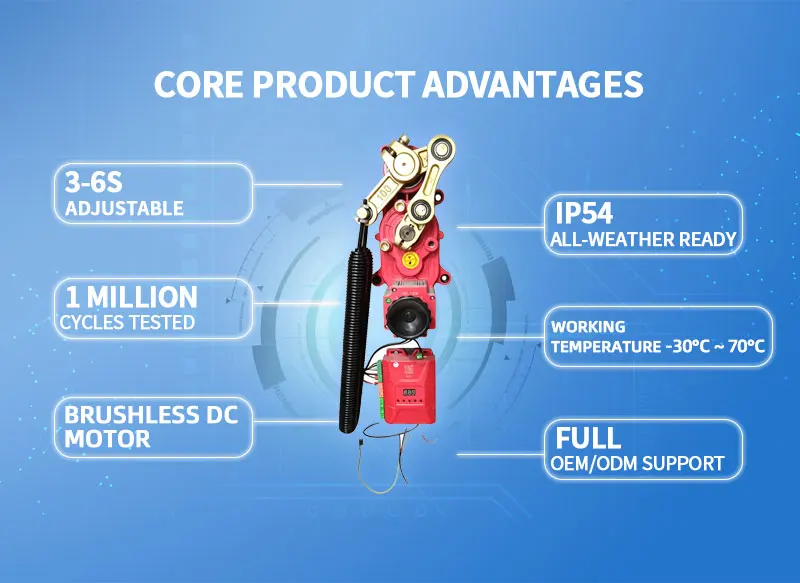
Two products both described as a "heavy-duty boom barrier" may perform very differently. Compare the motor type, opening and closing speed, arm length, operating frequency, control method, cabinet protection level and arm options. Ask for the data sheet of the actual model being offered, not a general catalogue that combines the specifications of several models.
Note that operating speed and arm length are usually related. A longer or heavier arm may need a different motor and balance spring configuration. The supplier should confirm the suitable combination based on the lane width, vehicle types, the number of cycles per hour and the operating requirement. Do not assume that the highest speed in the catalogue can be achieved at every arm length or in all site conditions.
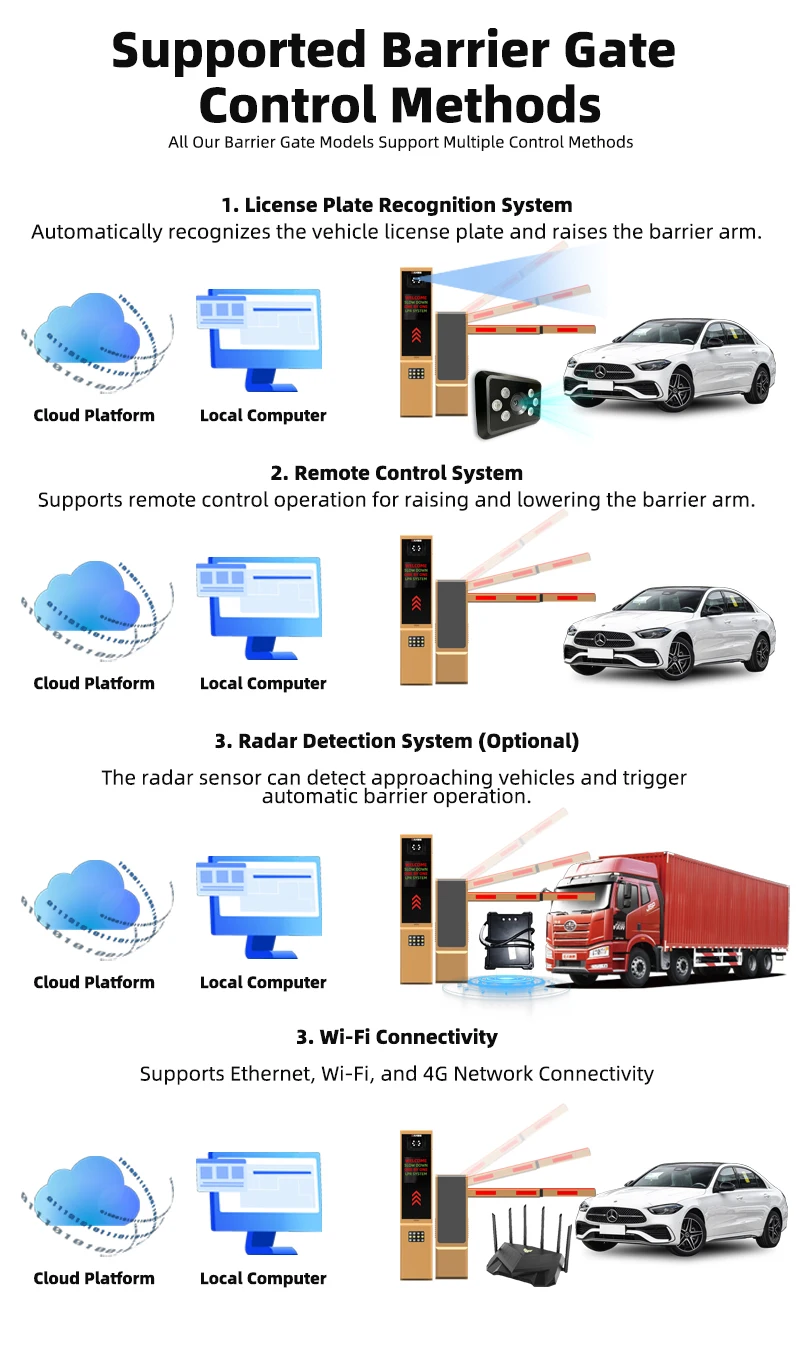
4. Assess Suitability for the Malaysian Environment
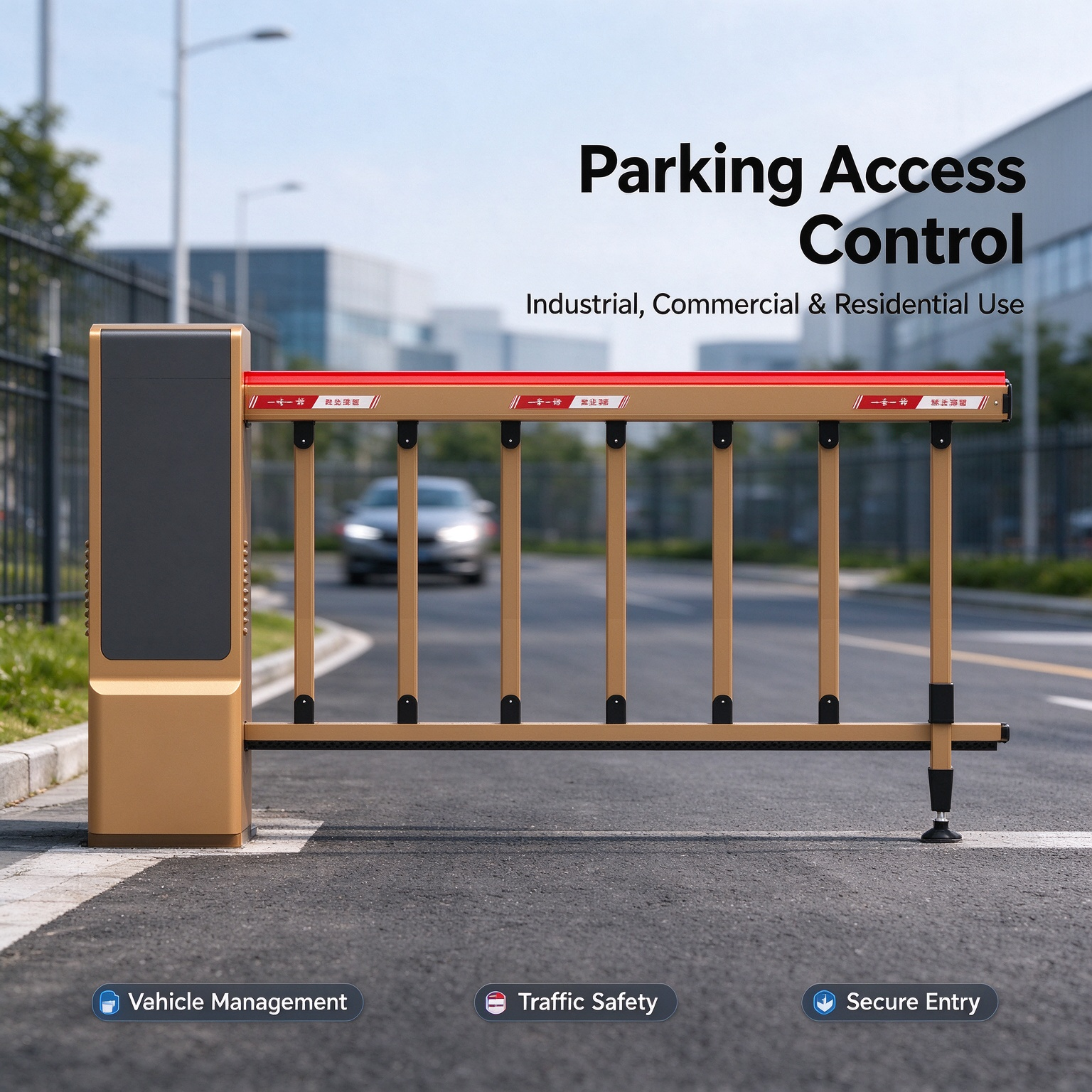
Heat, heavy rain, humidity and dust can affect equipment installed outdoors. Check the IP protection rating of the cabinet and the related components, the finish material, the corrosion protection, the drainage design and the operating temperature range. Make sure the stated rating refers to the actual model and configuration, not to the whole product range.
For exposed locations such as industrial areas, open multi-storey parking lots, logistics centers and apartment complex entrances, ask how the cabinet, cable connectors and electronic components are protected from water and dust. Request an inspection and maintenance schedule suited to the site conditions. If the supplier proposes an additional protective cover or canopy, ask for the technical reason to be stated in the quotation.
5. Check the Safety Features and Vehicle Detection
Safety should not be judged on the motor or the speed alone. Check the support for a vehicle loop detector, radar sensor, infrared photocell, obstruction detection, auto-reverse function and manual release when the power supply fails. Establish clearly which devices are actually included in the package and which have to be purchased separately.
For a busy lane, the sensor should be selected on the basis of the site layout, the vehicle types and the risk of a vehicle following too closely. Ask the supplier to explain how the system prevents the arm from coming down while a vehicle is still underneath, how it detects a stopped vehicle, and what happens when a sensor fails. The on-site acceptance test should cover both normal scenarios and reasonable failure scenarios.
6. Compare RFID, UHF and ANPR/LPR Integration
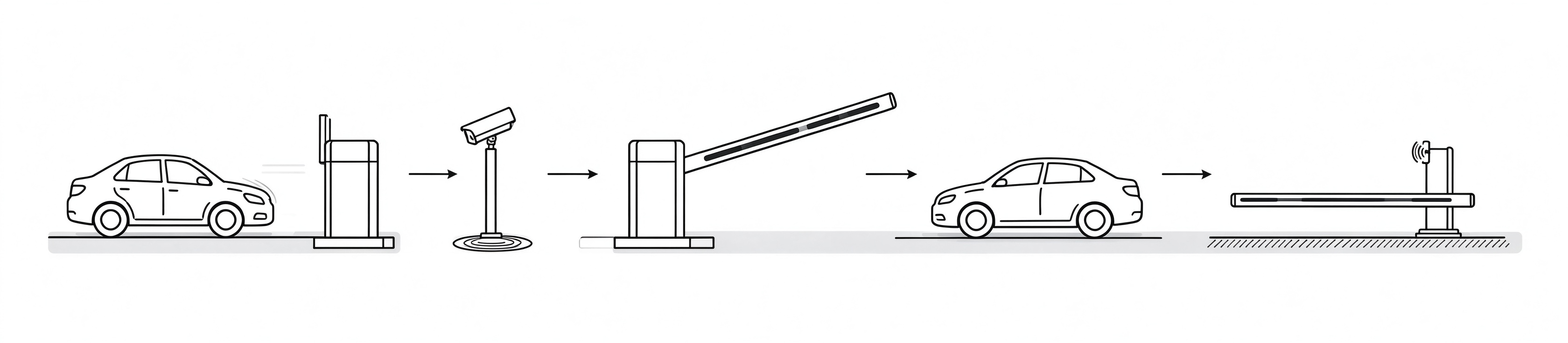
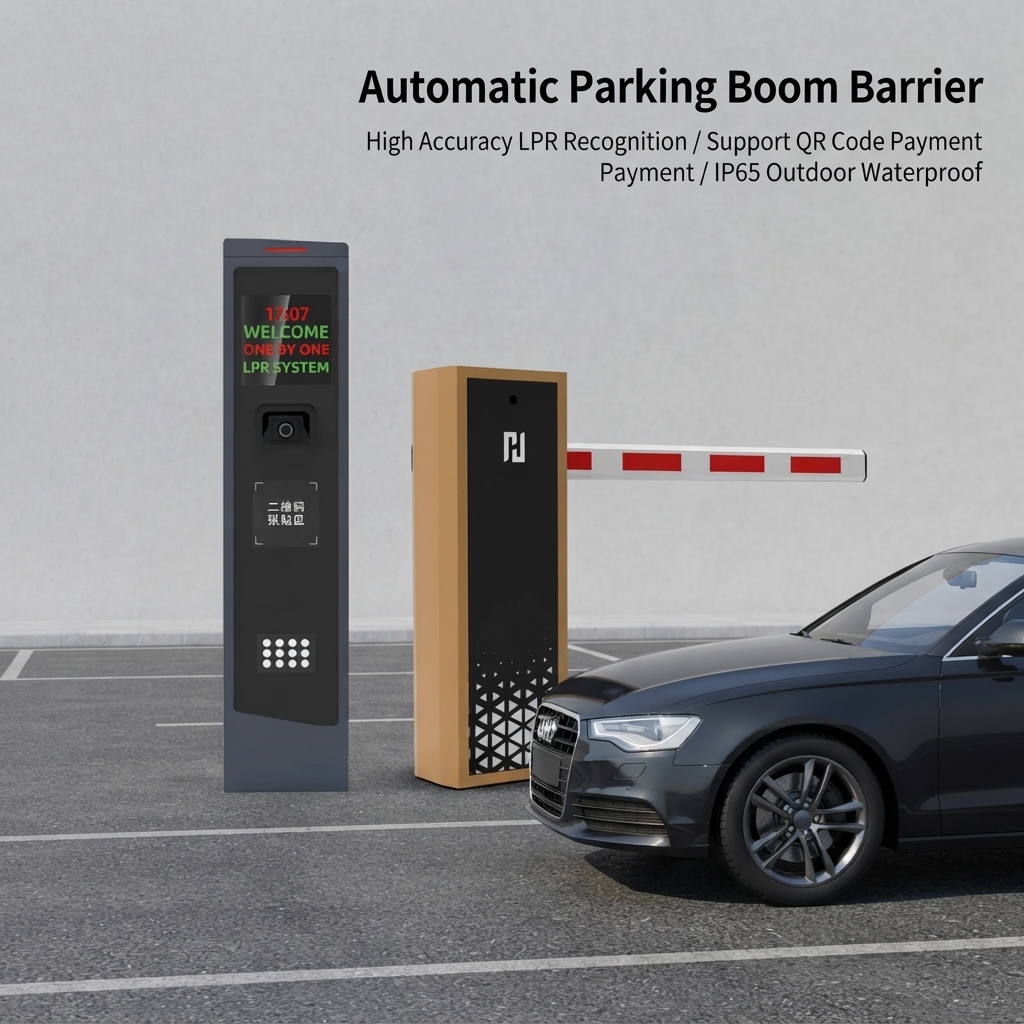
For a smart parking project, the boom barrier may need to work with long-range RFID readers, IC cards, QR codes, an Automatic Number Plate Recognition (ANPR) or License Plate Recognition (LPR) camera, the payment system and the parking management software. Ask for a system architecture diagram showing how each component communicates, who supplies the software, and which party is responsible when an integration problem occurs.
Check the protocols and interfaces supported, such as TCP/IP, RS485 or Wiegand, where relevant to the configuration being offered. Do not assume every protocol is available on every model. If the client wants to keep the existing parking system, ask for written confirmation of compatibility and run an integration test before large-scale installation. For ANPR, discuss the lighting conditions, camera angle, vehicle speed, registration number format and the procedure for plates that cannot be read.
7. Check Customisation Options and OEM/ODM Support
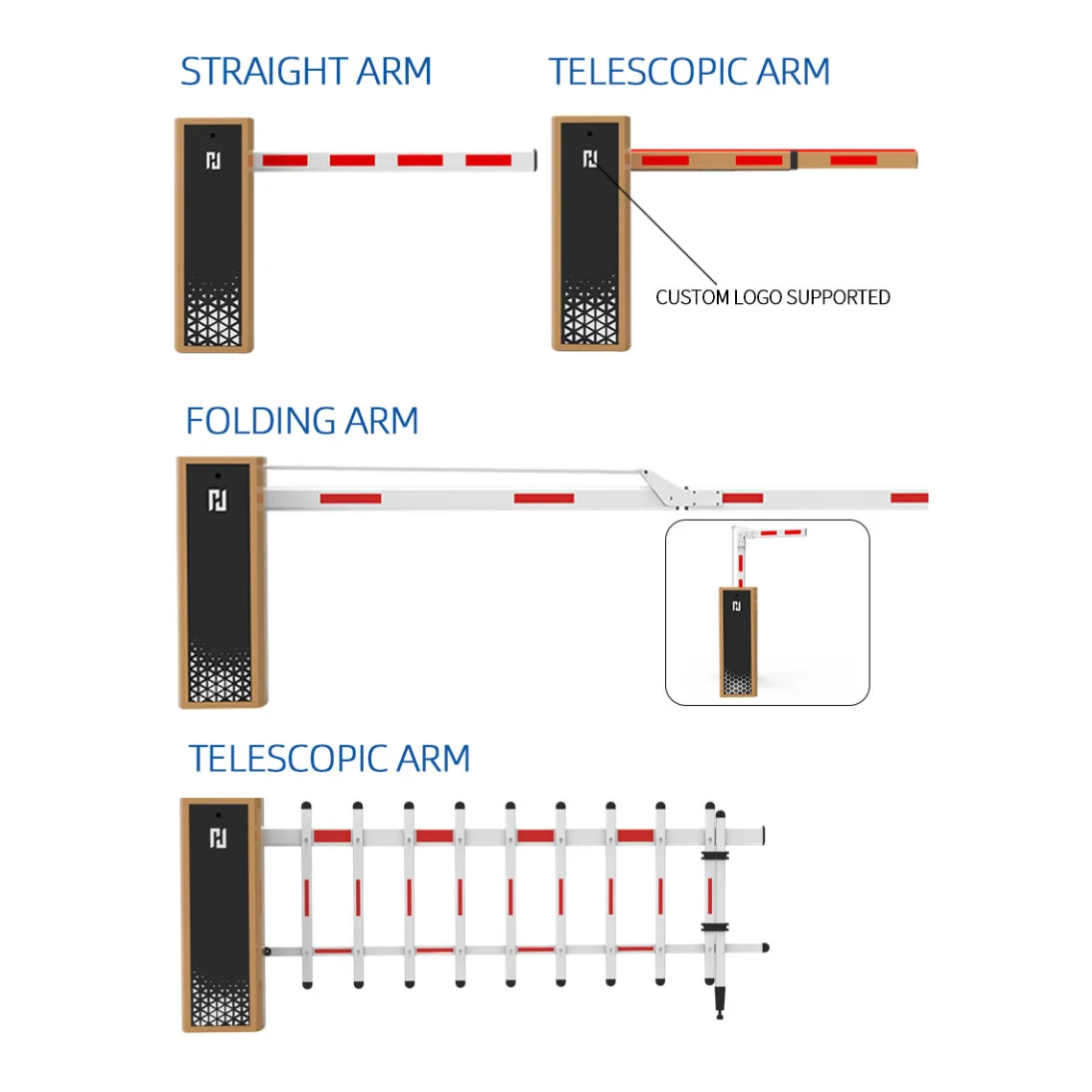
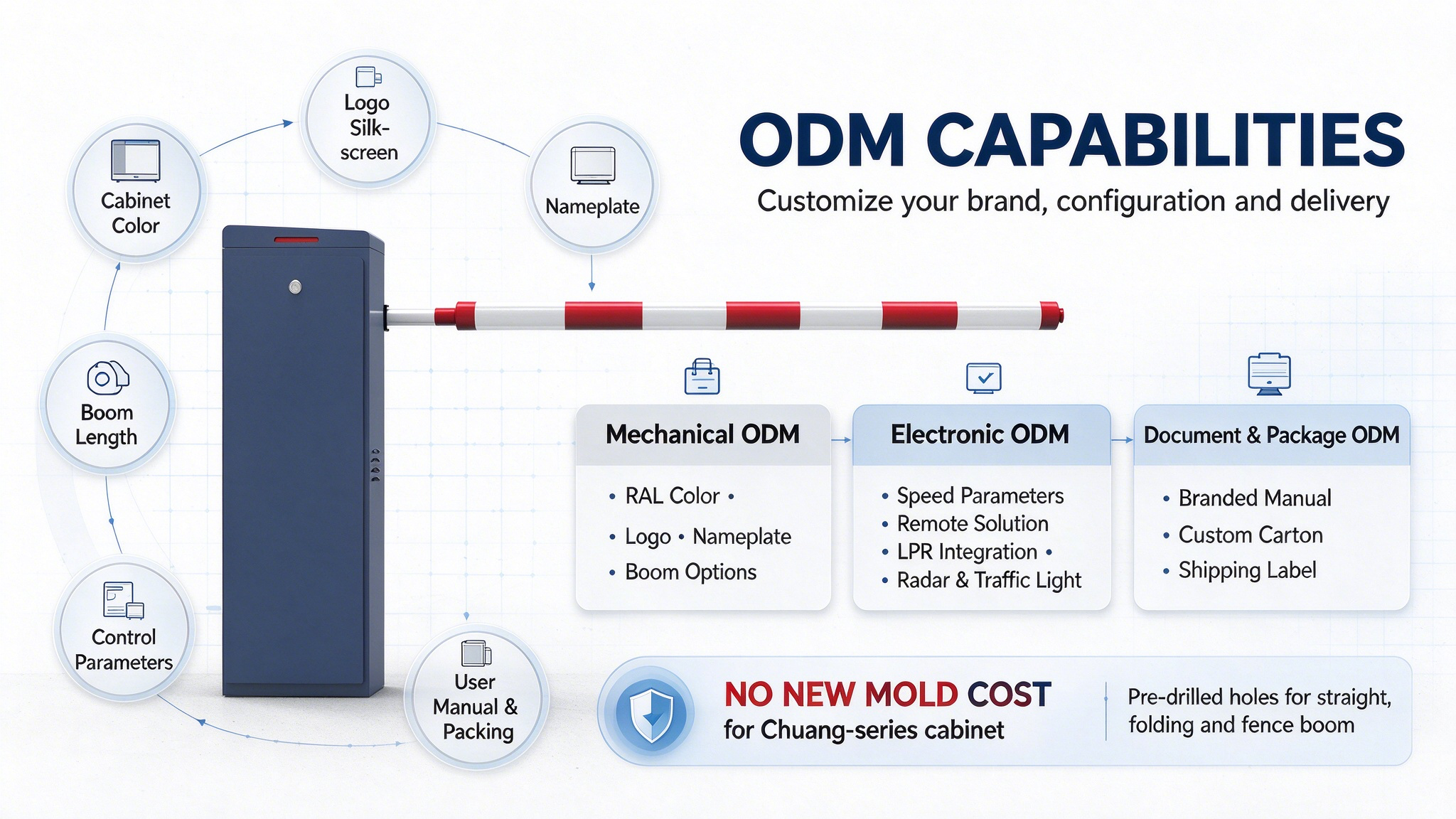
Project requirements may differ in terms of arm length, straight or folding arm type, cabinet color, safety stickers, logo, packaging and control logic. If you are a distributor or contractor managing several projects, ask whether the manufacturer provides OEM, ODM or custom branding. Ask for a list of what can be modified and what remains a standard configuration.
Make sure the change does not affect safety, warranty or spare part compatibility. Any significant customisation should be recorded in the drawing, the specification sheet and the purchase order. Avoid relying on verbal promises without written confirmation of the cost, production lead time, samples and approval procedure.
8. Compare Warranty, Spare Parts and After-Sales Support
A low purchase price does not necessarily produce a low cost of ownership. Check the warranty period for the motor, control board, sensors and other components; find out whether the warranty covers spare parts, labour, shipping or only certain components. Ask about the claim procedure, the documents required and the target response time.
Confirm the availability of spare parts such as the balance spring, boom arm, control board, motor, remote control and sensors. For a project that operates around the clock, ask whether the supplier can provide critical spares or hold buffer stock. Remote support is useful for diagnosis, but the buyer also needs to know who can attend the site if the problem cannot be resolved remotely.
9. Assess Relevant Project Experience and References
Relevant project experience is more meaningful than a long customer list. Ask for installation examples that are close to your project in terms of premises type, number of lanes, vehicle volume, access method and operating hours. For example, a barrier for a apartment complex has different requirements from a warehouse entrance that handles heavy trucks 24 hours a day.
Where possible, ask for a case study that explains the original problem, the model used, the sensor configuration, the integration method and the result after installation. Check whether the performance figures in the case study were measured on site or are simply marketing estimates. For a tender or a large-scale project, ask for customer references who can be contacted with their permission.
10. Compare Total Cost of Ownership, Not Just the Quotation Price
A fair quotation should list every component. Compare the price of the barrier unit, arm, safety sensors, RFID reader, ANPR camera, controller, software, cabling, concrete base, installation, configuration, training, delivery and applicable taxes. Make sure every supplier makes the same scope assumptions so that the comparison is not misleading.
Estimate the cost of periodic maintenance, spare parts, technician visits, software licences and possible downtime as well. A slightly more expensive product may be more suitable if it has components that are easy to service, spare parts that are available and clear support. Conversely, do not pay for premium features that the actual operation does not need. Ask for a cost breakdown and the validity period of the quotation in writing.
11. Use an Evaluation Matrix to Make the Decision
Once the information is collected, use the same scoring matrix for every candidate supplier. Assign weights according to the priorities of your project. The example below is a starting point and can be adjusted; it is not an official rating of any brand.
| Criteria | Suggested weight | Evidence to request |
|---|---|---|
| Factory capability and quality control | 15% | Factory video, test process, inspection records |
| Product specification and suitability | 20% | Model data sheet, drawings, configuration |
| Safety and vehicle detection | 15% | Sensor list, safety logic, acceptance test |
| RFID/ANPR integration and software | 15% | Protocol, system diagram, integration test evidence |
| Warranty, spare parts and support | 15% | Warranty terms, spare parts list, SLA |
| Relevant project experience | 10% | Case studies, customer references |
| Total cost of ownership | 10% | Detailed quotation, maintenance cost |
The point is to evaluate every supplier against the same evidence standard, not to judge on a sales presentation or a price figure alone.
12. Questions to Ask Before Placing an Order
Before issuing a purchase order, obtain written answers to the following questions:
- Are you the manufacturer, a distributor or a system integrator?
- What is the exact model number and configuration being offered?
- What is the arm length, operating speed and duty cycle for that configuration?
- Which safety sensors are included in the price?
- Is the system compatible with RFID, UHF, ANPR/LPR and the existing parking software?
- Which communication protocols are available on this model?
- Which technical documents, installation manuals and wiring drawings are supplied?
- What is the warranty scope and the support response time?
- Which critical spare parts are held in stock, and what is the replenishment lead time?
- What are the production, delivery, installation and commissioning periods?
- What acceptance test will be carried out before handover?
- Who is responsible if an issue arises between the barrier, camera, sensors and software?
Conclusion: Choose a Technical Partner, Not Just the Lowest Price
A suitable parking barrier manufacturer and supplier has to offer more than a product that looks robust. They should be able to demonstrate manufacturing capability, explain the model specification, recommend suitable safety features, support system integration and provide a clear after-sales plan. A structured assessment helps building owners, parking operators, contractors and integrators in Malaysia reduce procurement risk and make sure the system meets the real operating requirement.
BAROXON provides a range of solutions including boom barriers, high-speed barrier gates, automatic RFID boom barriers, ALPR/LPR systems, radar sensors, turnstile gates and related accessories. You can review the BAROXON boom barrier and parking access product range to see the configurations available, then share the lane width, premises type, vehicle volume, access method and integration requirement so that a more accurate configuration can be proposed. Specifications, lead time, warranty and support scope should be confirmed for the specific model and order before purchase.
Frequently Asked Questions
1. What is the difference between a parking barrier manufacturer and a parking barrier supplier?
A manufacturer is usually directly involved in product design and production, while a supplier may be a manufacturer, a distributor or an integrator. The buyer should confirm the real role of the company and which party is responsible for warranty, spare parts and technical support.
2. How should boom barrier quotations be compared?
Compare the quotations on the basis of the same configuration, including the barrier unit, arm length, motor, sensors, controller, integration, installation, training, delivery and warranty. Also assess the maintenance and spare parts cost over the period of use.
3. Do all automatic parking barriers support RFID and ANPR?
Not necessarily. Support depends on the model, controller, reader, camera and software being used. Ask for written confirmation of compatibility for the actual configuration and run an integration test before full deployment.
4. Which features matter for an outdoor barrier in Malaysia?
Check the IP rating of the cabinet, the corrosion protection, the finish material, the water management, the operating temperature and the suitability of the installation. The rating and the protection features have to be confirmed for the actual model.
5. Why are spare parts and after-sales support important?
A parking barrier that stops working can disrupt the traffic flow and the security control. Spare parts availability, the warranty claim procedure, diagnostic assistance and on-site support capability all help reduce operational downtime.
6. Which documents should be requested from the manufacturer?
Ask for the model data sheet, dimension and wiring drawings, installation and operation manuals, accessory list, warranty terms, test documents and a recommended spare parts list. For an integration project, also ask for the communication architecture and interface documents.
7. How can a buyer verify the factory capability?
Ask for production line photographs or video, test records, inspection checklists and quality control documents. Where the order value justifies it, arrange a factory visit or a video audit of the assembly and testing process. Ask how a failed unit is recorded and corrected before shipment.
8. Is a lower price always a better deal?
Not when the scope is different. A low price may exclude safety sensors, installation, commissioning, training or spare parts. Compare the total cost of ownership over the intended service life, including maintenance and downtime, before deciding.
Latest News
Baroxon® | Leading Boom Barrier Manufacturer
Advanced Security Access Control and Intelligent Parking Solutions.
Company Strength
Adequate Inventory
Fast Shipping
Our Products
CONTACT US
Address: No. 2 Wanshou Road, International Innovation Industrial Park, Jinan, Shandong, China


© COPYRIGHT 2025 Baroxon® | Leading Boom Barrier Manufacturer


Contact Us
Our passion is to bring your ideas to life. Work with our design team to create a one-of-a-kind custom finish or cladding system to create a truly unique space. Together we can make your story stand out. If you need something to request a sample, request pricing, or request a demo, please fill out the contact form below. Explain your request in as much detail as you can and a representative will contact you within 1 business day.