Baroxon® | Leading Boom Barrier Manufacturer

How to Reduce Vehicle Queues at Parking Entrances
Release time:
2026-10-30
Introduction: Why Do Vehicle Queues Form at Parking Entrances?
Vehicle queues at a parking lot entrance can happen even when plenty of parking bays are still available. The cause is often a verification process that takes too long, a card reader that struggles to detect the tag, manual checks by a guard, a slow ticket system, inaccurate vehicle sensors, or a boom barrier that does not match the traffic volume.
In Malaysia, this problem is commonly felt at apartment complexes, offices, shopping centers, hospitals, industrial parks and warehouses that receive a high vehicle flow at certain times. To reduce congestion, the operator has to look at the whole process from the moment a vehicle approaches the lane until it clears the barrier, not just replace the motor with a faster one.
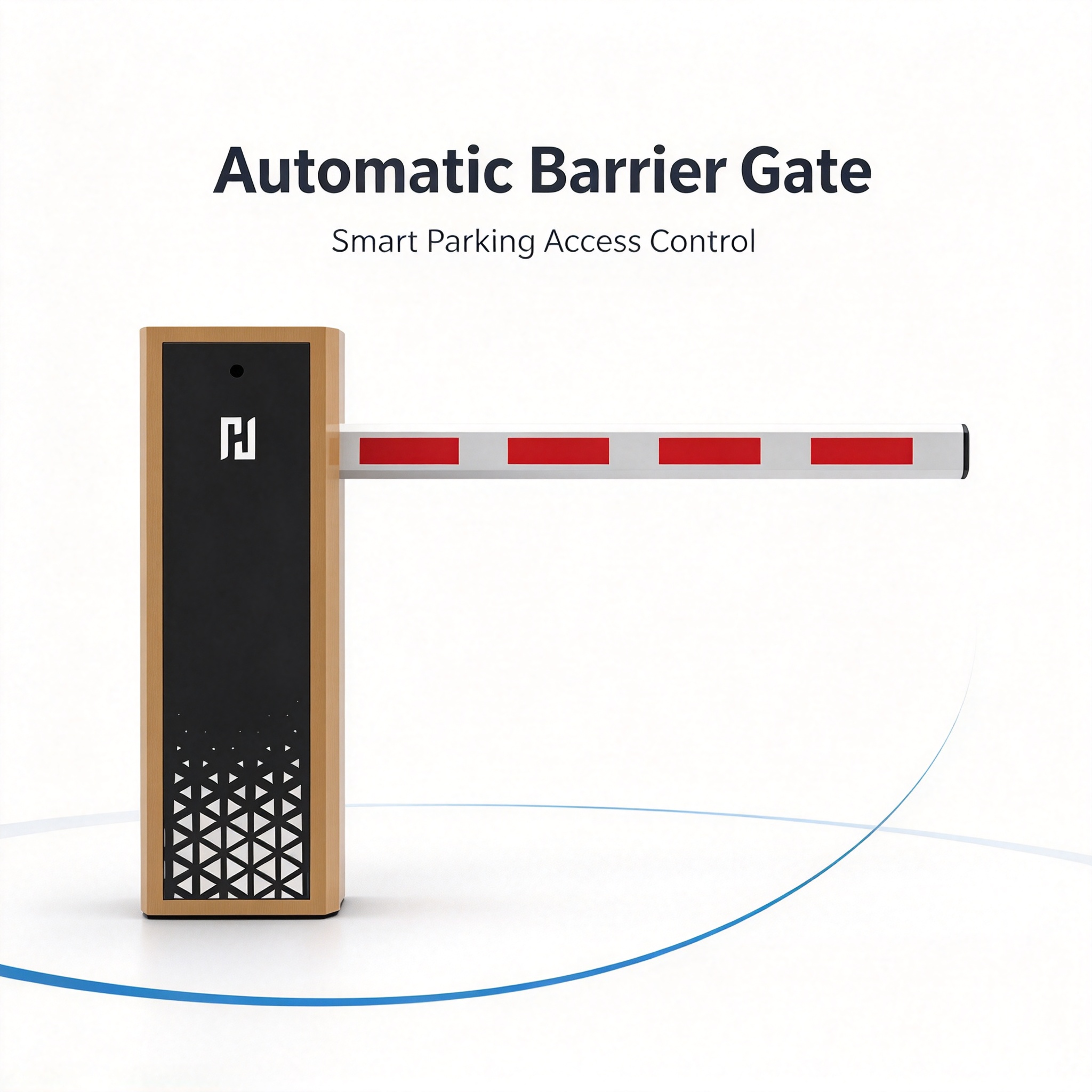
1. Identify the Real Cause of the Queue Before Upgrading
Before buying new equipment, measure the performance of the existing lane. Record the time from the vehicle stopping at the verification point until the barrier opens, the time the vehicle takes to clear the barrier, the number of vehicles queueing at peak time and how often a transaction fails. Note also whether the problem occurs at the entry lane, the exit lane or both.
Break the process time into stages: vehicle detection, card or registration number reading, access authorisation, the command to the barrier controller, boom arm movement and detection of the vehicle leaving the barrier zone. This data helps establish whether the delay comes from the reader, the network, the software, the controller, the motor or the physical layout.
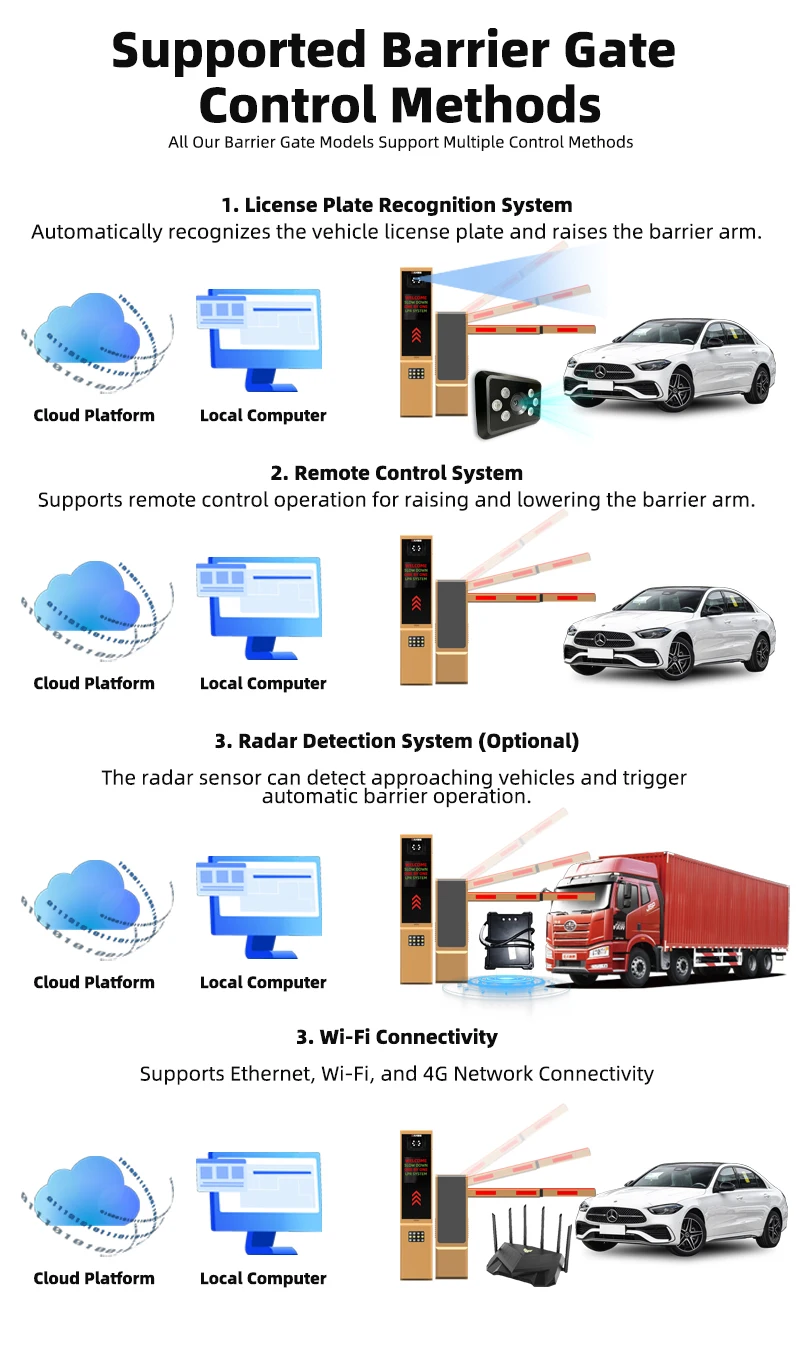
2. Use RFID or UHF for Registered Vehicles
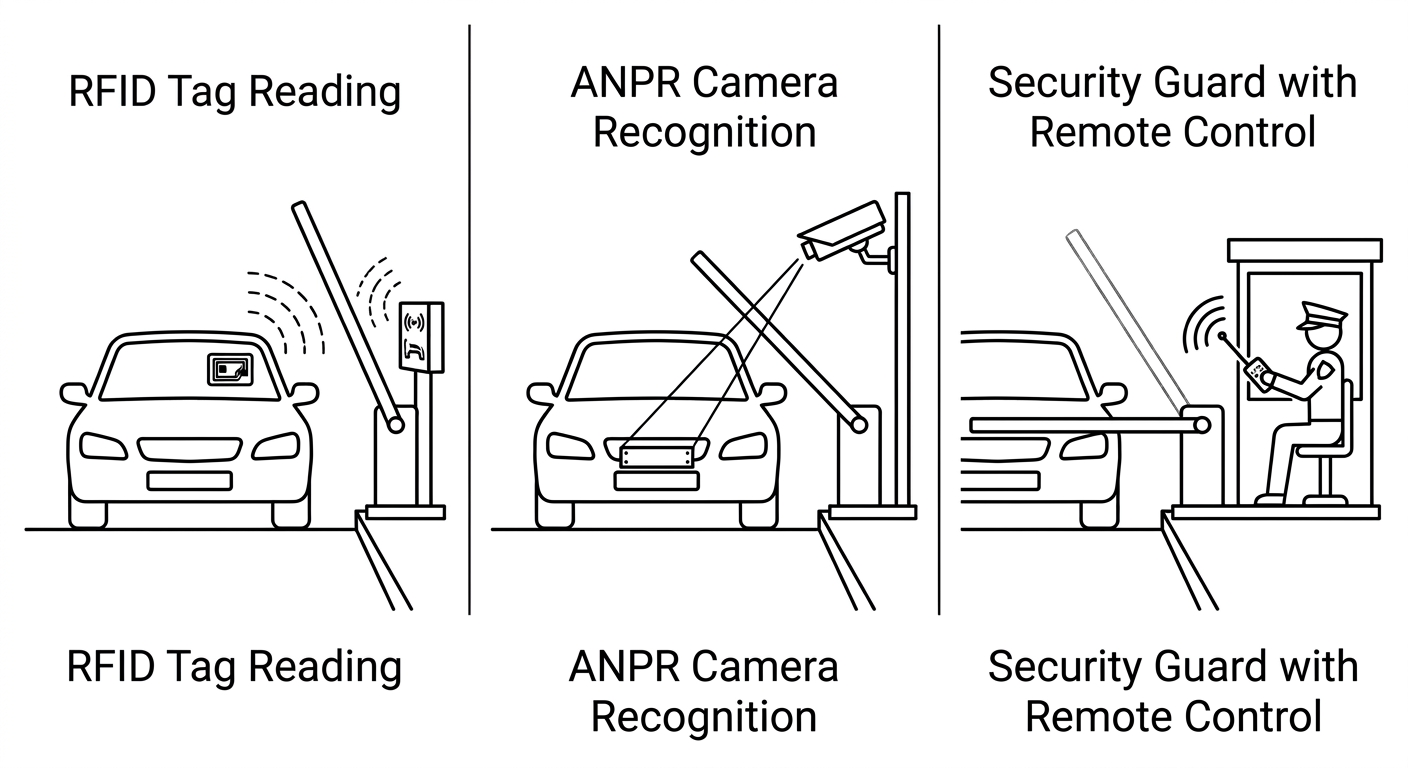
For apartment complexes, offices and premises with regular users, RFID or UHF can remove the need for the driver to stop and hand over a card or collect a ticket. The reader detects the registered card or tag, then the system checks the access permission before sending the open command to the barrier.
For longer range access, consider a UHF reader and a suitable tag position on the vehicle. The actual read distance is affected by the reader type, antenna, tag, vehicle glass, mounting angle, radio interference and lane conditions. Run an on-site test with the actual vehicle types and do not rely on the maximum distance quoted in the brochure alone.
BAROXON lists Automatic RFID Boom Barrier solutions and UHF readers for vehicle access applications. The system should be configured so that one vehicle receives one valid authorisation and the barrier does not open repeatedly because of an unstable tag read.
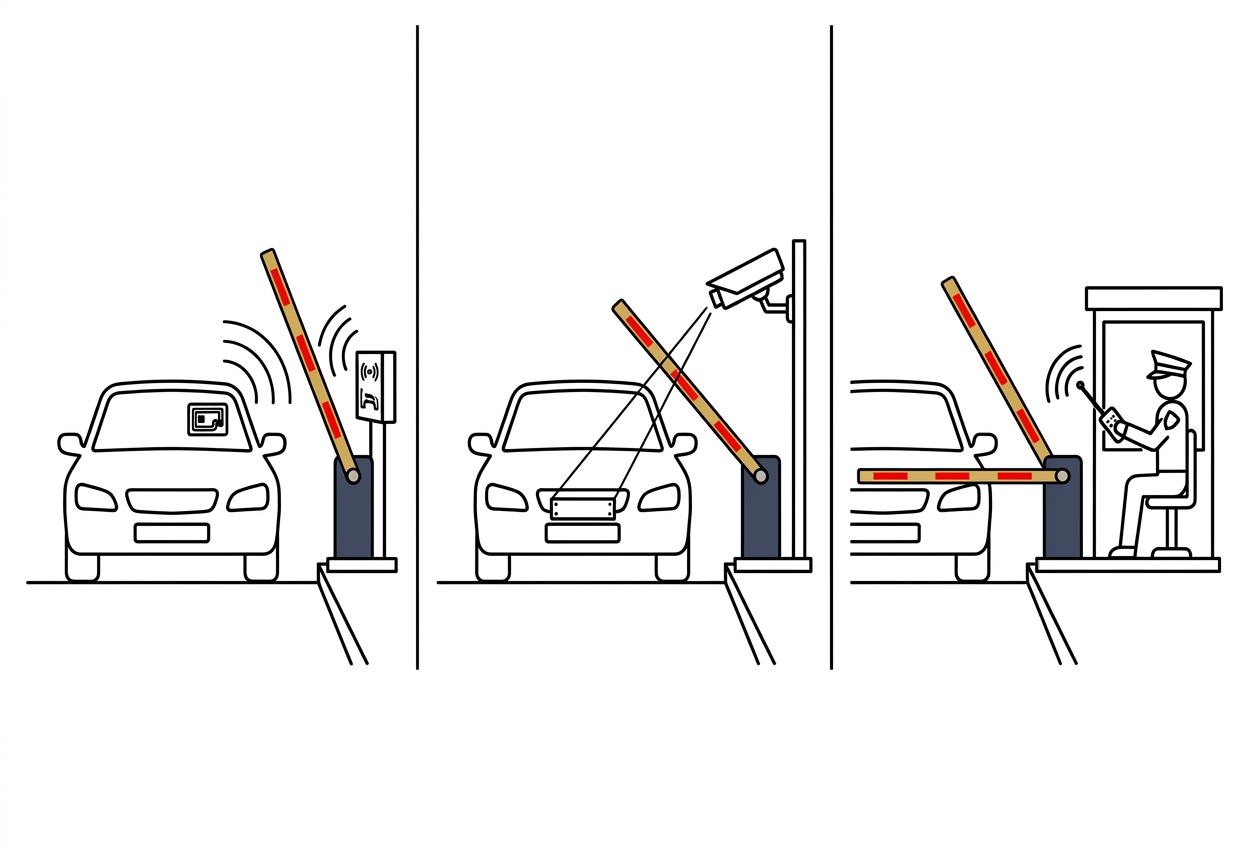
3. Consider ANPR/LPR for Touchless Access
ANPR or LPR uses a camera and number plate recognition software to identify a vehicle. If the registration number is registered and permitted, the system can send the open command without the driver needing to scan a card. This method is worth considering for registered visitors, season parking users or parking operations that need an entry and exit record.
Recognition accuracy depends on the camera position, viewing angle, lighting, vehicle speed, plate condition, headlight glare and software configuration. Set the recognition zone so that vehicles slow down at a suitable point but do not stop so early that they block the vehicle behind.
Provide a fallback method such as a QR code, RFID or guard assistance for plates that cannot be read. This prevents a single recognition failure from stopping the whole queue.
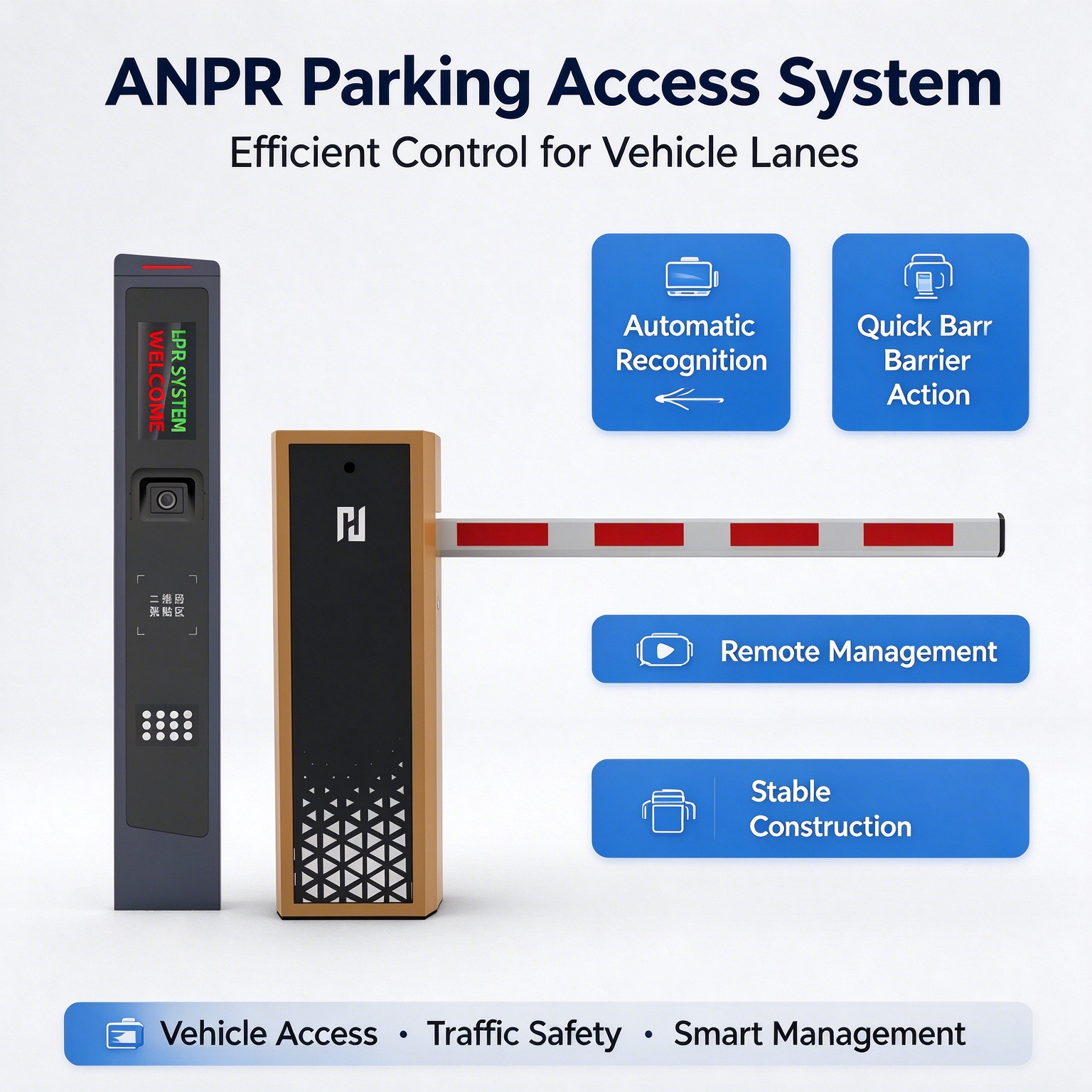
4. Choose a Boom Barrier Speed That Matches the Traffic
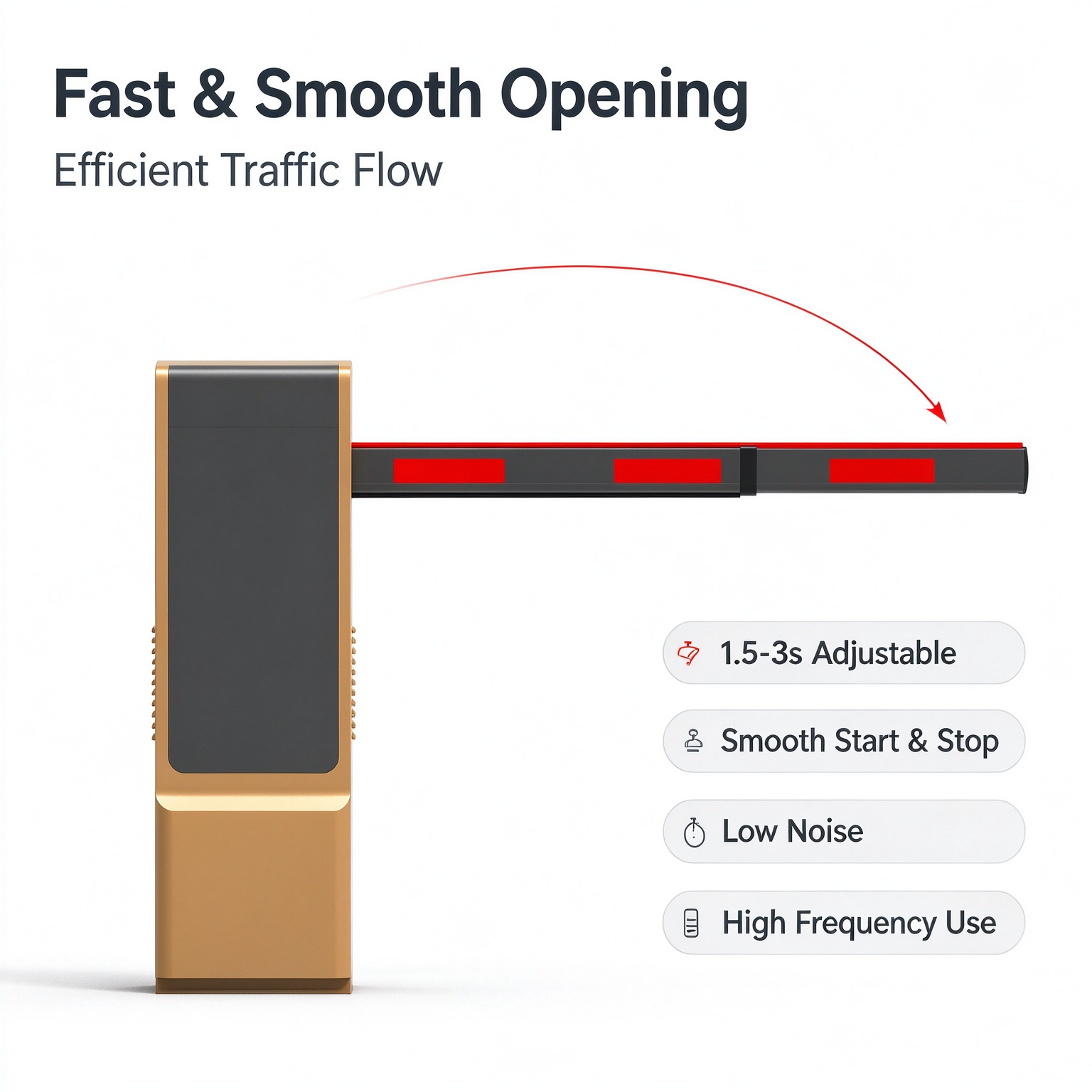
Barrier opening time is one of the factors that affects lane capacity, but it is not the only measure. A fast barrier does not necessarily clear a queue if the authorisation process takes a long time or vehicles follow too closely. Conversely, a barrier that does not match the boom arm length and operating frequency can affect smoothness and system durability.
BAROXON offers a High Speed Barrier Gate category and several brushless boom barrier configurations. As a specific example, the Ba-106 Premium product page lists a speed of 0.4 seconds, while the YH-PDPY601 product page lists options of 0.6 seconds, 0.9 seconds or an adjustable 1.5-6 seconds depending on the configuration. These figures are the specification of a model or a particular option, not a guaranteed speed for every barrier.
When selecting, confirm the opening and closing time for the actual boom arm length and type, the duty cycle, the daily cycle rate and the suitability of the motor for peak traffic. Ask for a demonstration or a test based on the lane layout of the project.
5. Use Suitable Vehicle Sensors to Control the Barrier Sequence
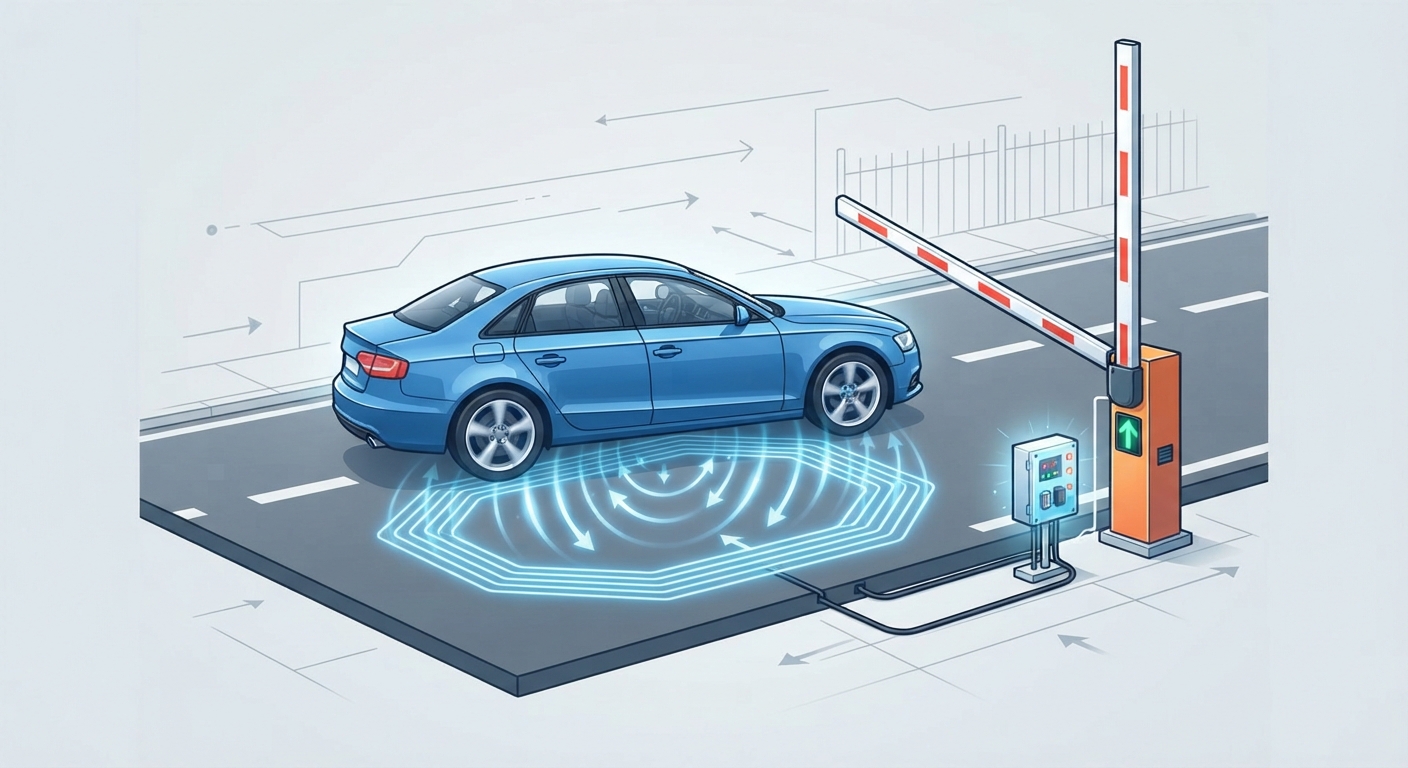
Vehicle sensors help the system know when a vehicle has arrived, is under the boom arm and has cleared the barrier zone. The options can include a vehicle loop detector, a radar sensor or a photocell, depending on the lane design and the controller being used.
In open areas, radar can help detect the presence or movement of a vehicle without relying entirely on an inductive loop cut into the road surface. However, the detection zone, sensing direction, mounting height and sensitivity settings have to be tested to avoid detecting vehicles in the adjacent lane or unrelated objects.
BAROXON lists radar sensors and RFID/radar solutions for parking and logistics applications. For sites that experience rain, dust or headlight glare, compare sensor technologies on the basis of testing at the actual location. The safety sensor must also ensure that the barrier does not come down on a vehicle still inside the danger zone.
6. Rework the Lane Geometry and the Verification Point
An automated system cannot work efficiently if the lane design forces vehicles to stop too early, turn sharply or block the public road while queueing. Make sure there is enough waiting space before the verification point and the boom arm, as well as space after the barrier so that a vehicle can move out without obstruction.
Place the RFID reader, ANPR/LPR camera, intercom and signage where the driver can reach them easily. Avoid putting the verification point too close to a bend, a steep ramp or an area with limited visibility. For sites with high entry and exit flows, consider dedicated lanes for residents, visitors, deliveries or heavy vehicles where space and site rules allow.
Make sure pedestrian routes, emergency routes and fire access are not blocked by the queue. The traffic plan should be reviewed with the facility manager and the relevant authorities before installation.
7. Reduce Manual Checks with Digital Visitor Management
Repeated manual checks can be a major source of delay, especially when the guard has to call the resident, check a visitor list or record the registration number by hand. A visitor pre-registration system can allow residents or staff to register a visitor before arrival and issue a QR pass or an access permission with a validity period.
At the entrance, the guard only has to handle exceptions such as unregistered visitors, a registration number that does not match, or deliveries that need extra verification. This workflow lets approved vehicles move through the automated process, while cases that need further checking are diverted to a waiting area that does not block the main lane.
If the parking system keeps cloud records or a central database, make sure access to visitor records, transactions and barrier logs is controlled according to user roles and the organisation's privacy policy.
8. Integrate the Barrier with the Parking and Payment System
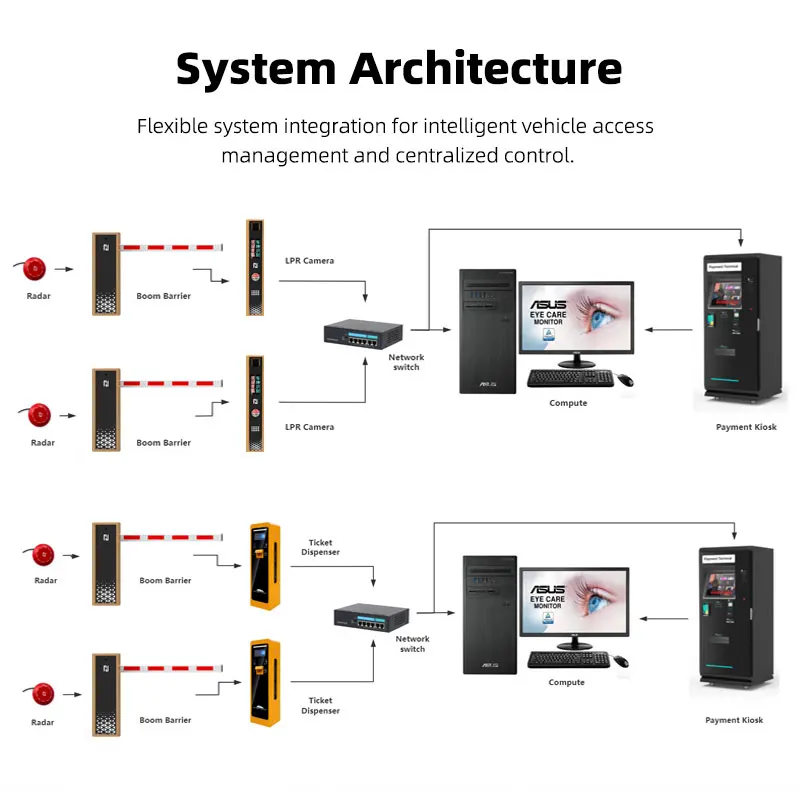
In shopping centers, commercial buildings and public parking lots, congestion can occur when entry verification, charge calculation and payment are not coordinated. An integrated parking system can connect the ANPR/LPR camera, boom barrier, vehicle database, digital ticket and payment system so that entry and exit records are processed more consistently.
BAROXON presents the All-in-One ANPR Smart Parking Management System and Integrated Ticketless PARCS on its official website. For an actual project, confirm the functions required, such as paperless tickets, cashless payment, integration with local payment gateways, parking rate management, transaction reports and the operating mode when the network is down. Do not assume every function is included in every standard package.
9. Provide Enough Lane Capacity for Peak Hours
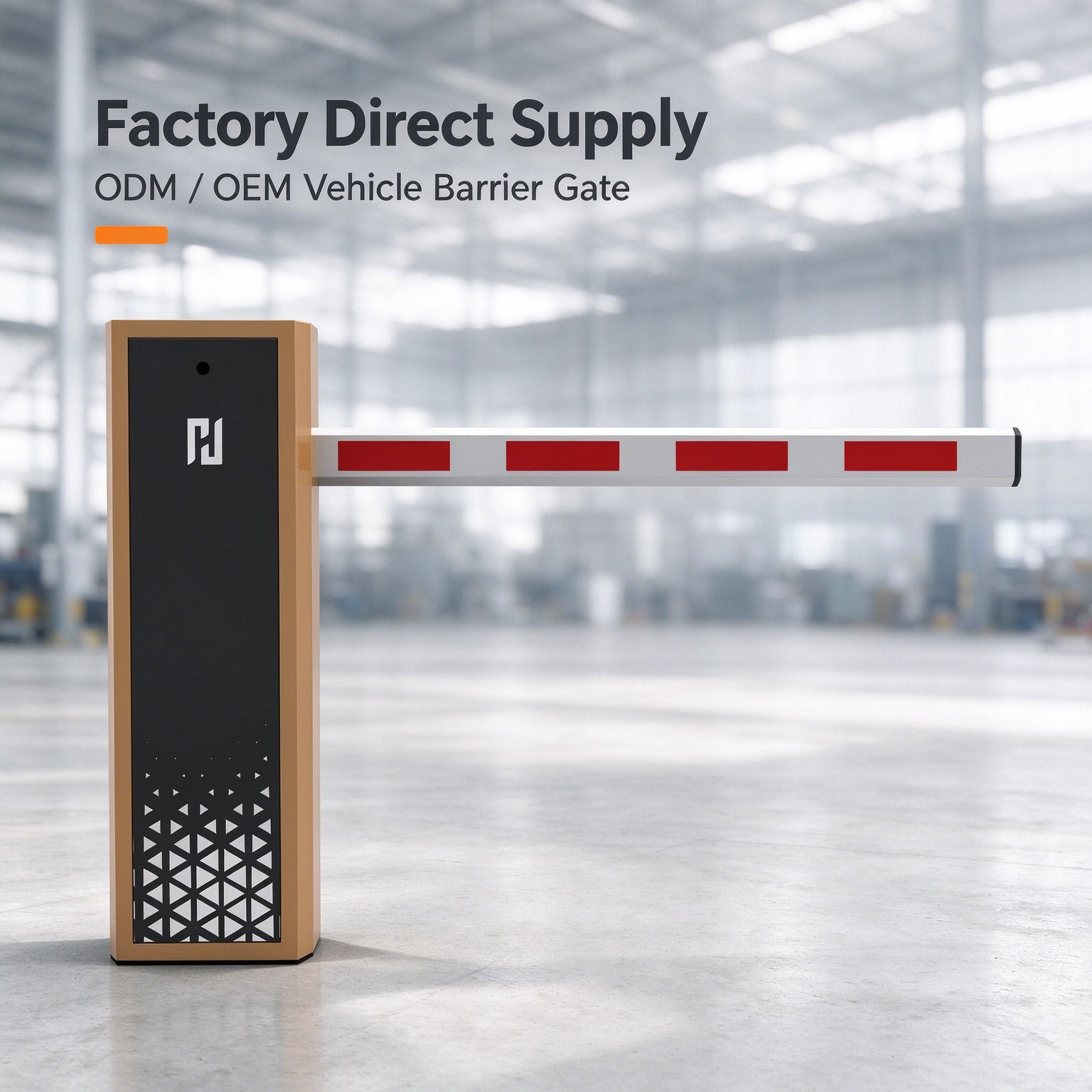
If a single lane has to process too many vehicle types and transactions, a queue may still form even when the equipment is working properly. Analyse the vehicle volume at peak time, the proportion of registered users, the visitor rate, delivery vehicles and the average transaction time. Based on that data, decide whether to add a lane, separate the entry and exit flows or provide a dedicated lane for registered users.
Do not add a lane without considering the queue storage space, the traffic merge point and the road capacity after the entrance. Two lanes that merge too early can simply move the congestion to another part of the site. Use clear directional signage and road markings so that drivers choose the correct lane before reaching the reader.
10. Monitor Performance and Maintain the System Regularly
After the system is upgraded, monitor the transaction time, the successful RFID or ANPR read rate, the number of manual openings, sensor faults, equipment downtime and the queue length at peak time. Review the reports regularly to detect a change in performance before the problem becomes serious.
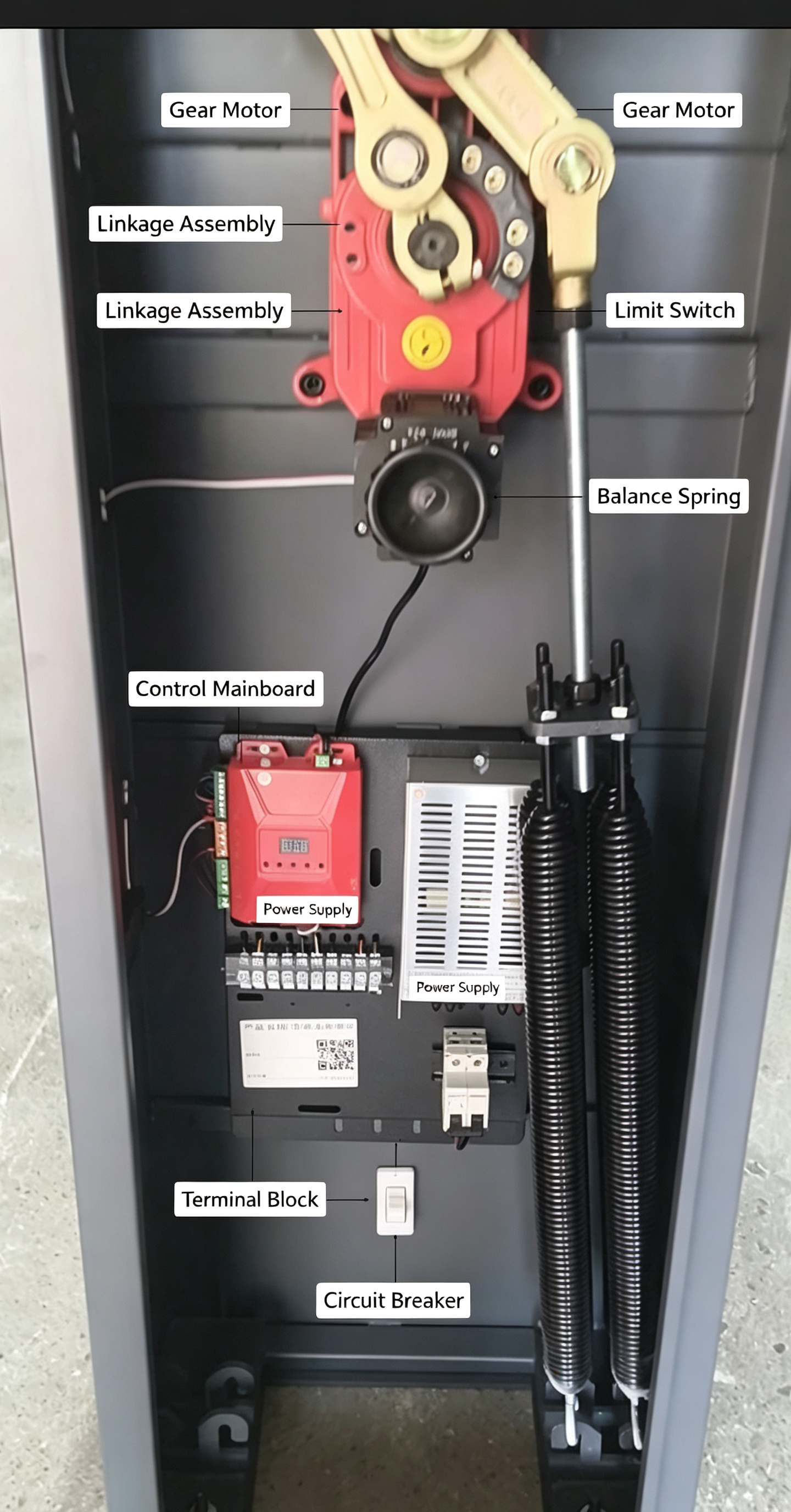
The maintenance schedule should cover inspection of the boom arm and balance spring, mechanical fasteners, cabinet, wiring, RFID reader, camera, sensors, network system and safety functions. Clean the camera and reader according to the manufacturer's instructions, check the sensor alignment and test the auto-reverse or anti-collision function according to the site safety procedure.
Prepare a manual procedure for when the power supply or network is interrupted. Make sure guards and facility staff know how to handle an emergency situation without compromising the safety of road users.
11. Example of a Smoother Entry Flow
For a apartment complex with registered residents, one flow worth considering is: the vehicle approaches the resident lane, the UHF reader detects the tag, the system checks the account status, the sensor confirms the vehicle position, then the barrier opens. After the vehicle clears the barrier zone, the exit sensor confirms that the lane is empty and the system is ready for the next vehicle.
For a shopping center with many visitors, an ANPR/LPR camera can identify vehicles that have been registered, while the ticket or QR system is used for other visitors. A transaction that fails to read can be directed to an assistance lane or a side area so that it does not block vehicles that have already been approved.
For a warehouse or logistics area, UHF RFID and radar can be combined to identify authorized vehicles and to detect presence and direction of movement. Integration with delivery records helps the operator check vehicle movement without relying entirely on manual inspection.
Frequently Asked Questions
1. What is the most effective way to reduce vehicle queues at a parking entrance?
Start by identifying the cause of the delay. A combination of RFID/UHF or ANPR/LPR, suitable vehicle sensors, a boom barrier that matches the traffic and a good lane design is usually more effective than upgrading a single component.
2. Is RFID faster than a manual check?
For registered vehicles, RFID can reduce the manual checking steps because the system reads the tag and verifies the permission automatically. The actual performance depends on the reader, the tag, the antenna installation, the access configuration and the site conditions.
3. When is ANPR/LPR suitable?
ANPR/LPR is suitable when the premises wants to identify vehicles by registration number, reduce dependence on physical cards or record entry and exit transactions. The camera has to be tested under the actual lighting conditions and mounting angle at the site.
4. Does a faster boom barrier always reduce congestion?
No. If the authorisation, payment or vehicle detection process takes a long time, a fast barrier alone will not solve the problem. The whole transaction sequence has to be optimised.
5. What is the role of a radar sensor at a parking entrance?
A radar sensor can help detect the presence or movement of a vehicle and support control of the barrier sequence. Its selection and placement have to be tested so that the detection zone does not overlap with another lane.
6. How do I stop a queue from blocking the public road?
Provide enough waiting space inside the premises, place the verification point at a suitable distance from the public road and use signage to direct vehicles into the correct lane. The traffic plan also has to consider the road capacity after the entrance.
7. Should every lane be automated?
Not necessarily. A lane that handles many exceptions, such as deliveries and unregistered visitors, may work better with a guard-assisted process and a separate waiting area. Automate the lanes with a high proportion of registered users first, then review the remaining lanes.
8. How often should the system be checked?
At least according to the manufacturer's maintenance schedule, with more frequent checks at high-traffic sites. Cameras and readers need regular cleaning, and the sensors, springs and safety functions should be tested so that performance does not drop gradually without anyone noticing.
Conclusion
Reducing vehicle queues at a parking entrance requires a combination of fast verification, automated access control, accurate vehicle detection, a suitable boom barrier and a practical lane design. RFID/UHF can help regular users, ANPR/LPR can support touchless access, while radar sensors and a parking management system help control the vehicle flow in a more orderly way.
For a project in Malaysia, start with a traffic and transaction time audit on site. Then choose the equipment combination based on the user types, the peak vehicle volume, the environmental conditions and the existing system. Test the whole flow before full operation and monitor performance after installation.
You can also review the BAROXON boom barrier and parking access product range to see which barrier, reader and sensor combinations suit a high-traffic entrance.
Latest News
Baroxon® | Leading Boom Barrier Manufacturer
Advanced Security Access Control and Intelligent Parking Solutions.
Company Strength
Adequate Inventory
Fast Shipping
Our Products
CONTACT US
Address: No. 2 Wanshou Road, International Innovation Industrial Park, Jinan, Shandong, China


© COPYRIGHT 2025 Baroxon® | Leading Boom Barrier Manufacturer



Contact Us
Our passion is to bring your ideas to life. Work with our design team to create a one-of-a-kind custom finish or cladding system to create a truly unique space. Together we can make your story stand out. If you need something to request a sample, request pricing, or request a demo, please fill out the contact form below. Explain your request in as much detail as you can and a representative will contact you within 1 business day.