Baroxon® | Leading Boom Barrier Manufacturer

What Is a Parking Barrier? Types, Uses and How It Works
Release time:
2026-10-30
Introduction: Why Parking Barriers Matter
A parking barrier — also known as a boom barrier or boom gate — is a vehicle access control device installed at the entrance and exit of a parking area. The system uses a barrier arm that rises and lowers to control the movement of authorized vehicles. In Malaysia, parking barriers are widely used at apartment complexes, offices, shopping malls, hotels, factories, logistics warehouses and commercial parking lots.
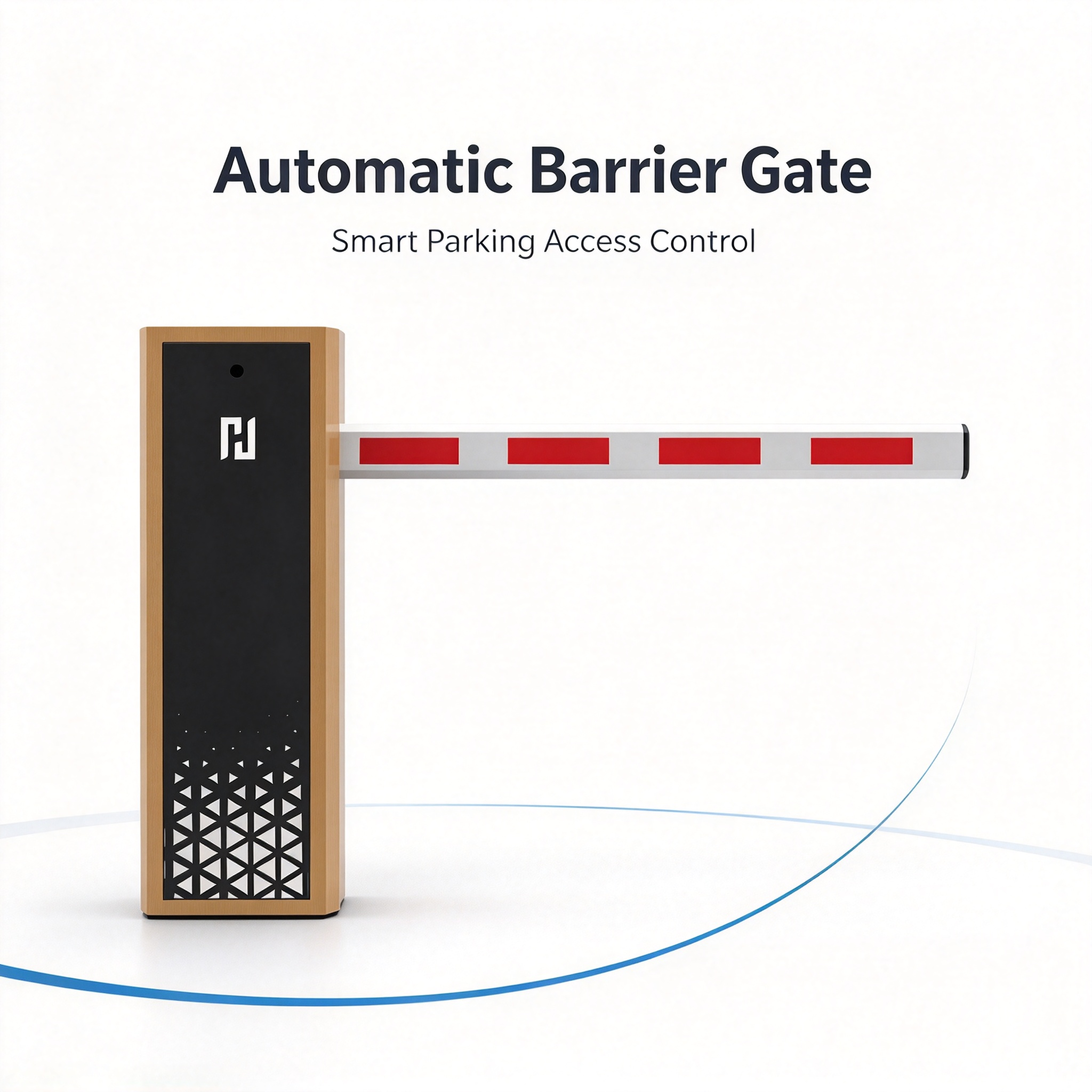
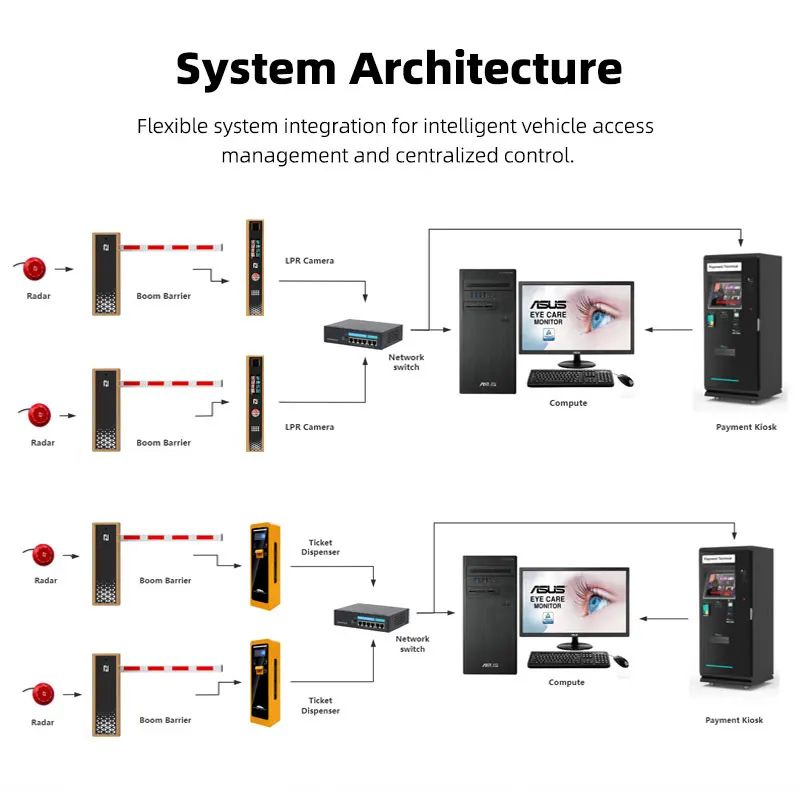
A modern parking barrier is more than a bar that blocks vehicles. When integrated with RFID readers, automatic number plate recognition (ANPR/LPR) cameras, radar sensors and parking management software, it can become part of a more complete access control system. Property operators can manage resident, visitor, staff and supplier vehicles more systematically, while recording entry and exit activity according to the system configuration.
What Is the Main Function of a Parking Barrier?
The main function of a parking barrier is to control vehicle access on a single entry or exit lane. The arm stays in the closed position until the system receives a valid command from a remote control, access card, RFID reader, ANPR/LPR camera, security guard or parking management system. Once the vehicle has safely passed the detection zone, the arm can be lowered again according to the controller settings.
Besides restricting unauthorized entry, the system helps organize traffic flow, reduce reliance on manual checks and support parking transaction records. For facilities that charge for parking, the barrier can operate together with a ticketing system, a payment system or a Parking Access and Revenue Control System (PARCS), depending on the project design.
Types of Parking Barriers
Parking barriers are generally grouped by arm design, operating speed and access method. The table below offers a quick comparison before each type is described in detail.
| Type | Typical application | Common access method |
|---|---|---|
| Automatic boom barrier | Apartment complex, office, commercial and industrial entrances | Remote control, card, RFID, ANPR/LPR |
| High-speed barrier gate | Commercial parking lot entrances, transport hubs, toll plazas | Remote control, ticket, RFID, ANPR/LPR |
| Folding arm barrier | Underground and low-clearance parking lots | Remote control, card, RFID |
| RFID automatic boom barrier | Residential and long-term user access | UHF RFID tag or card |
| ANPR/LPR parking barrier | Ticketless access and vehicle record management | Camera-based plate recognition |
1. Automatic Boom Barrier
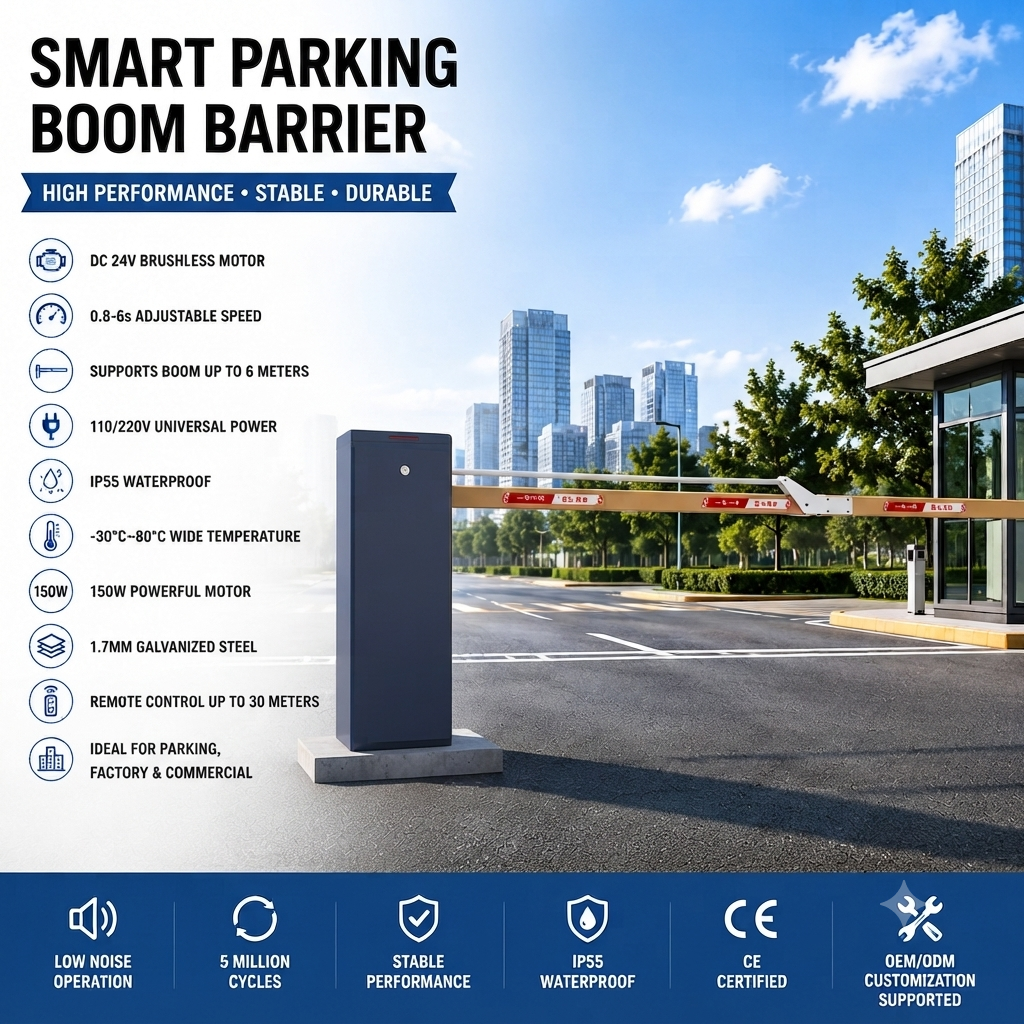
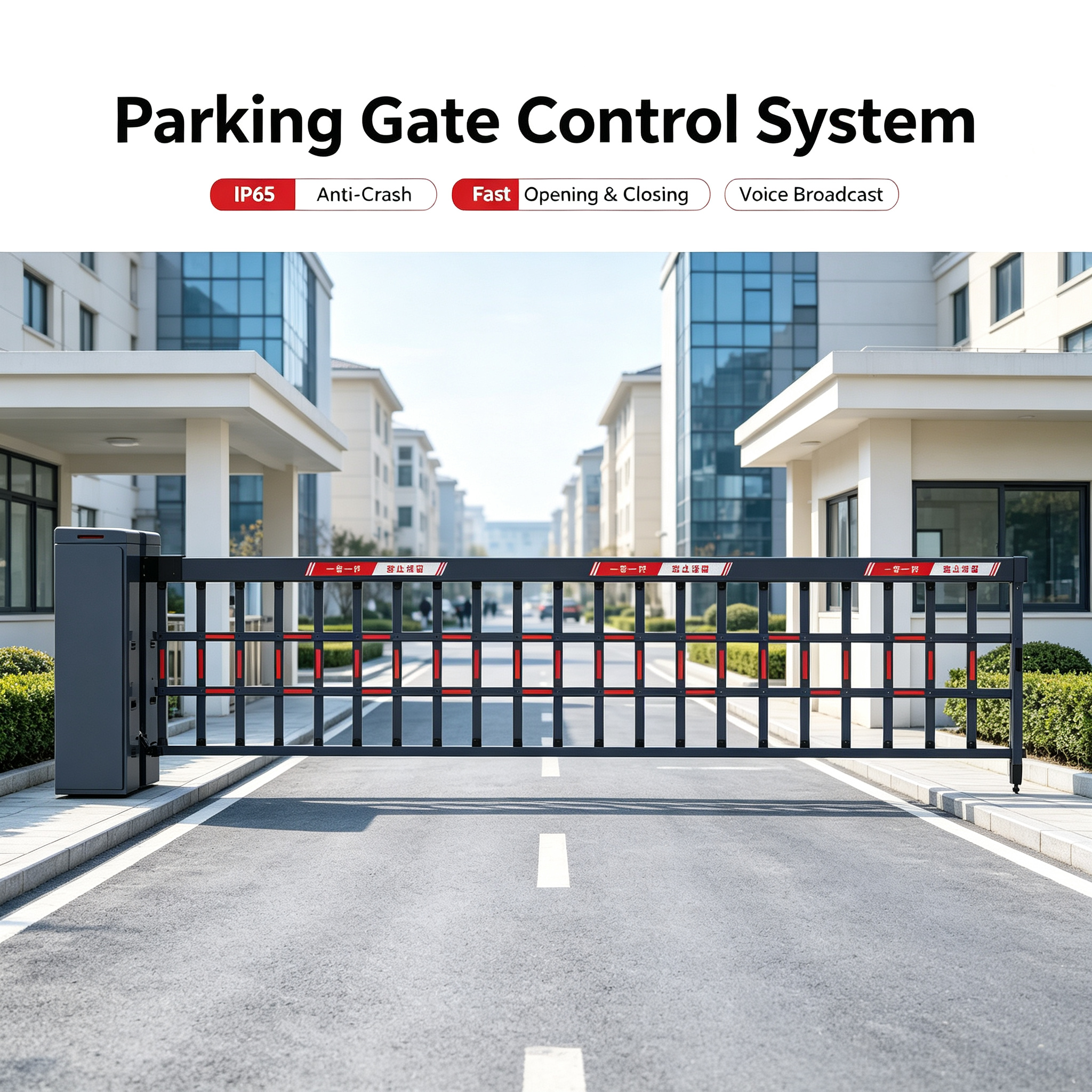
An automatic boom barrier is the most common type of parking barrier. It consists of a drive cabinet, a motor, a balance mechanism and a barrier arm. When it receives a valid access command, the motor raises the arm; once the lane is confirmed safe, the arm is lowered again. This type is suitable for apartment complex, office, commercial, industrial and private parking lot entrances.
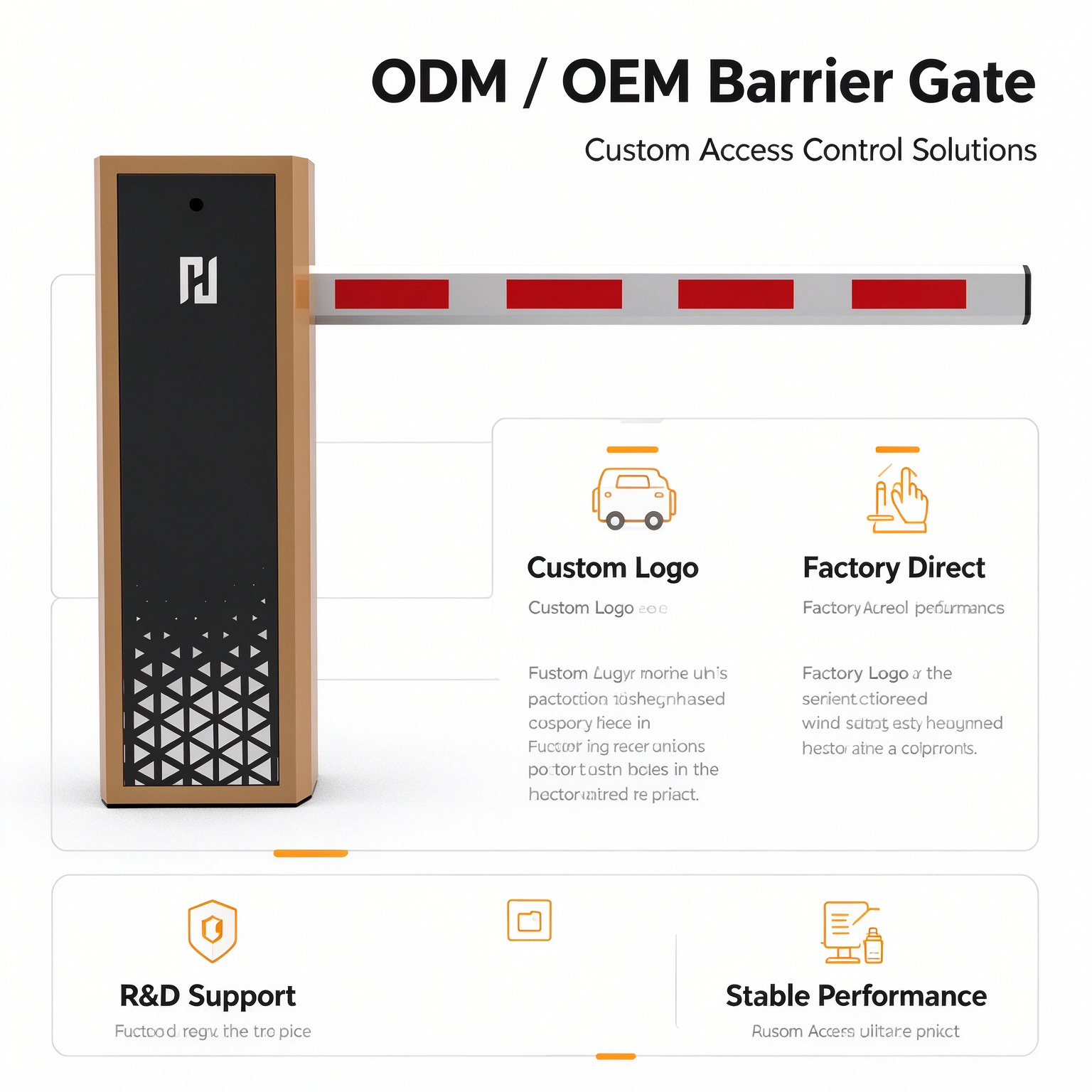
Model selection should take into account lane width, arm length, daily operating frequency, opening and closing speed, installation space and the access control method. For busy lanes, operators should assess the cycle capacity and motor suitability based on the actual vehicle count, rather than choosing on opening speed alone.
2. High-Speed Barrier Gate
A high-speed barrier gate is designed for locations that require fast response and high vehicle throughput. It can be considered for commercial parking lot entrances, transport hubs, toll plazas or operating lanes with a large number of vehicle movements. The actual speed should be matched to the arm length, safety requirements, detection sensors and site traffic needs.
3. Folding Arm Barrier
A folding arm barrier uses an articulated arm to overcome limited vertical space. This design is useful at underground parking lot entrances, multi-storey buildings or areas with low ceilings and structural obstructions. Before installation, measure the clear height, the arm folding space, the vehicle position and the safety distance carefully.
4. RFID Automatic Boom Barrier
An RFID automatic boom barrier uses a card, tag or long-range UHF RFID reader to identify authorized vehicles. Residents or long-term users can link an RFID tag to a vehicle or account; when the vehicle approaches the reading zone, the system verifies the credential and sends an opening command to the barrier controller. The actual reading distance and identification stability depend on the reader, the tag, the mounting position, vehicle speed and the site environment.
5. ANPR/LPR Parking Barrier System
An ANPR (Automatic Number Plate Recognition) or LPR (License Plate Recognition) system uses a camera and software to read a vehicle's registration number. The recognized number is compared with an allowed-vehicle list or access rules in the software. If verification succeeds, the system sends an opening command to the boom barrier. This solution is suitable for facilities that require ticketless access or vehicle record management, subject to lighting, camera angle, number plate condition and software configuration.
How Does a Parking Barrier System Work?
An automatic parking barrier system usually operates through a combination of an electronic controller, a motor, a barrier arm, an access verification device and safety sensors. The typical operating flow is as follows:
- The vehicle approaches the lane. The vehicle stops or moves into the designated detection area.
- Identity or permission is verified. The system reads an RFID card, UHF tag, registration number via ANPR/LPR, an access code or a guard's instruction.
- The controller sends a command. If access is approved, the electronic controller activates the motor to raise the barrier arm.
- Sensors monitor the lane. Depending on the design, inductive loop, radar or photocell sensors can be used to detect the presence or movement of a vehicle and help prevent the arm from lowering while the lane is still obstructed.
- The arm is lowered again. After the vehicle passes the detection zone and safe conditions are met, the system lowers the arm according to its settings.
- Access records are stored. If connected to management software, entry time, exit time, registration number or card ID can be recorded according to the system's functions.
Where Are Parking Barriers Used in Malaysia?
Apartment Complexes and Gated Communities
Parking barriers help control access for residents, visitors and contractors at the entrance to residential areas. Combining a boom barrier with RFID or ANPR/LPR can reduce manual checks and support more orderly access records. Management should also set out clear visitor procedures and emergency access arrangements.
Offices and Commercial Buildings
In office buildings, shopping malls and hotels, parking barriers can be integrated with staff cards, visitor systems, parking tickets or payment platforms. Appropriate configuration helps distinguish access for staff, tenants, customers and visitors.
Factories and Logistics Warehouses
Industrial areas require control over employee cars, delivery trucks and contractor vehicles. A heavy-duty boom barrier matched with RFID and vehicle sensors can help organize movement at site gates, guardhouses and logistics lanes.
Public Parking Lots and Transport Hubs
Public parking lots, transport hubs, airports, ports and toll areas may require high-capacity systems. Integration with ANPR/LPR, contactless ticketing and parking revenue management can be considered based on traffic volume and operating requirements.
How to Choose the Right Parking Barrier
Before buying an automatic parking barrier or boom gate, property owners and system contractors should evaluate several points:
- Lane width and arm length: Make sure the arm length covers the lane width without obstructing pedestrian paths or nearby structures.
- Vehicle volume and operating frequency: Estimate peak-hour traffic and the daily open-close cycle to determine the appropriate usage class.
- Access method: Decide whether the site needs a remote control, card, RFID/UHF, ANPR/LPR, QR code or a combination of methods.
- Sensors and safety features: Check support for radar, inductive loop, photocell, auto-reverse and manual release during a power failure. Choose the configuration based on a site risk assessment.
- Installation conditions: Consider rain, heat, humidity, dust, drainage, electrical protection and the cabinet protection rating stated in the model specification.
- Integration with existing systems: Confirm compatibility with the parking software, cameras, card readers, network and payment system before placing an order.
- After-sales support and spare parts: Check the warranty period, spare parts availability, installation guidance and technical support.
Why Consider BAROXON for Your Parking Barrier Project?
BAROXON provides a range of solutions covering boom barriers and boom gates, high-speed barrier gates, ALPR/LPR systems, automatic RFID boom barriers, radar sensors, turnstiles, parking locks and related accessories. This portfolio allows project owners to evaluate vehicle and pedestrian access control options based on the site layout and operating requirements.
For projects in Malaysia, the solutions can be considered for gated communities, commercial buildings, parking lots, factories, warehouses and transport facilities. The final selection should be based on model specifications, site drawings, traffic volume, integration requirements and a safety assessment. You can explore BAROXON's parking barrier and boom gate range and contact the BAROXON team to discuss the right arm length, motor type, verification method and sensor configuration.
Frequently Asked Questions
1. What does "parking barrier" mean?
A parking barrier is an access control device that uses a barrier arm to control vehicles entering and leaving a specific area. It is also known as a parking barrier, boom barrier or boom gate.
2. What is the difference between a boom barrier and an automatic gate?
A boom barrier typically uses a barrier arm that rises and lowers to control a single vehicle lane. An automatic gate usually refers to a sliding gate or swing gate that opens and closes the entire opening. The two have different functions and space requirements.
3. Can a parking barrier work with RFID?
Yes. Compatible models and controllers can be connected to an RFID or UHF reader. When a valid tag is identified, the system can send a command to open the barrier arm. The reading distance depends on the equipment and installation conditions.
4. Can a boom barrier be integrated with ANPR/LPR cameras?
Yes. An ANPR/LPR system can read a vehicle's registration number and send the verification result to the barrier controller through a supported integration. Recognition performance depends on the camera, lighting, installation angle and number plate condition.
5. Are parking barriers suitable for outdoor use in Malaysia?
Models designed for outdoor installation can be considered, but buyers should check the cabinet protection rating, coating material, corrosion protection and temperature range in the model specification sheet. Do not assume that all models have the same level of protection.
6. Which sensors can be used with a boom barrier?
Depending on the system design, options include inductive loops, radar sensors and photocells. Sensors must be selected and installed correctly so that the system can detect vehicles or obstacles and reduce the risk of the arm lowering before the lane is safe.
7. How do I determine the barrier gate arm length?
Measure the lane width and check the position of the cabinet, support posts, road dividers and pedestrian paths. The arm length should be selected based on the actual layout and model limits, not on a visual estimate alone.
Conclusion
A parking barrier is an important component of a modern vehicle access control system. From automatic boom barriers to RFID and ANPR/LPR systems, the right choice can help facilities in Malaysia manage traffic flow, strengthen entry control and organize parking records. Before choosing a system, assess traffic volume, lane width, verification method, safety sensors, environmental conditions and integration requirements.
BAROXON offers a range of boom barriers, number plate recognition systems, RFID and access control equipment for a variety of applications. Contact BAROXON for configuration recommendations based on your project requirements in Malaysia.
Latest News
Baroxon® | Leading Boom Barrier Manufacturer
Advanced Security Access Control and Intelligent Parking Solutions.
Company Strength
Adequate Inventory
Fast Shipping
Our Products
CONTACT US
Address: No. 2 Wanshou Road, International Innovation Industrial Park, Jinan, Shandong, China


© COPYRIGHT 2025 Baroxon® | Leading Boom Barrier Manufacturer



Contact Us
Our passion is to bring your ideas to life. Work with our design team to create a one-of-a-kind custom finish or cladding system to create a truly unique space. Together we can make your story stand out. If you need something to request a sample, request pricing, or request a demo, please fill out the contact form below. Explain your request in as much detail as you can and a representative will contact you within 1 business day.