Baroxon® | Leading Boom Barrier Manufacturer

Automatic Boom Barrier Specification Checklist
Release time:
2026-10-30
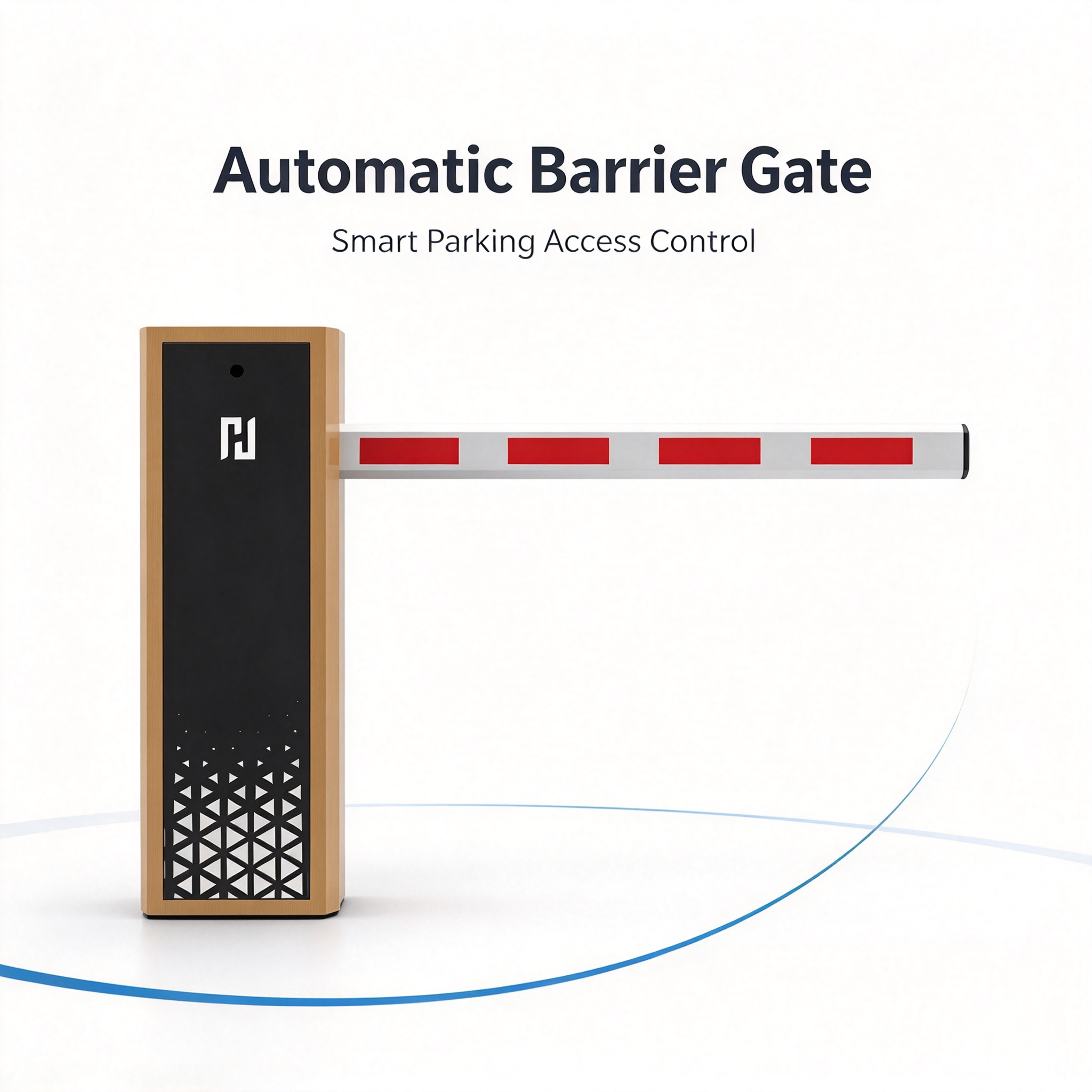
Introduction: Why Boom Barrier Specifications Need Careful Checking
Choosing an automatic boom barrier gate is not just a matter of deciding on the arm length or picking the fastest motor. The right specification has to match the entry lane, the daily vehicle volume, the access control method, the safety requirement and the installation environment. For premises in Malaysia, heavy rain, high humidity, strong sunlight and frequent operation also have to be taken into account.
Before requesting quotations or issuing a tender document, prepare a clear technical checklist. This step helps ensure the supplier proposes a suitable model, reduces the risk of incompatibility and makes it easier to compare several options on equal terms.
1. Identify the Site Type and Traffic Pattern
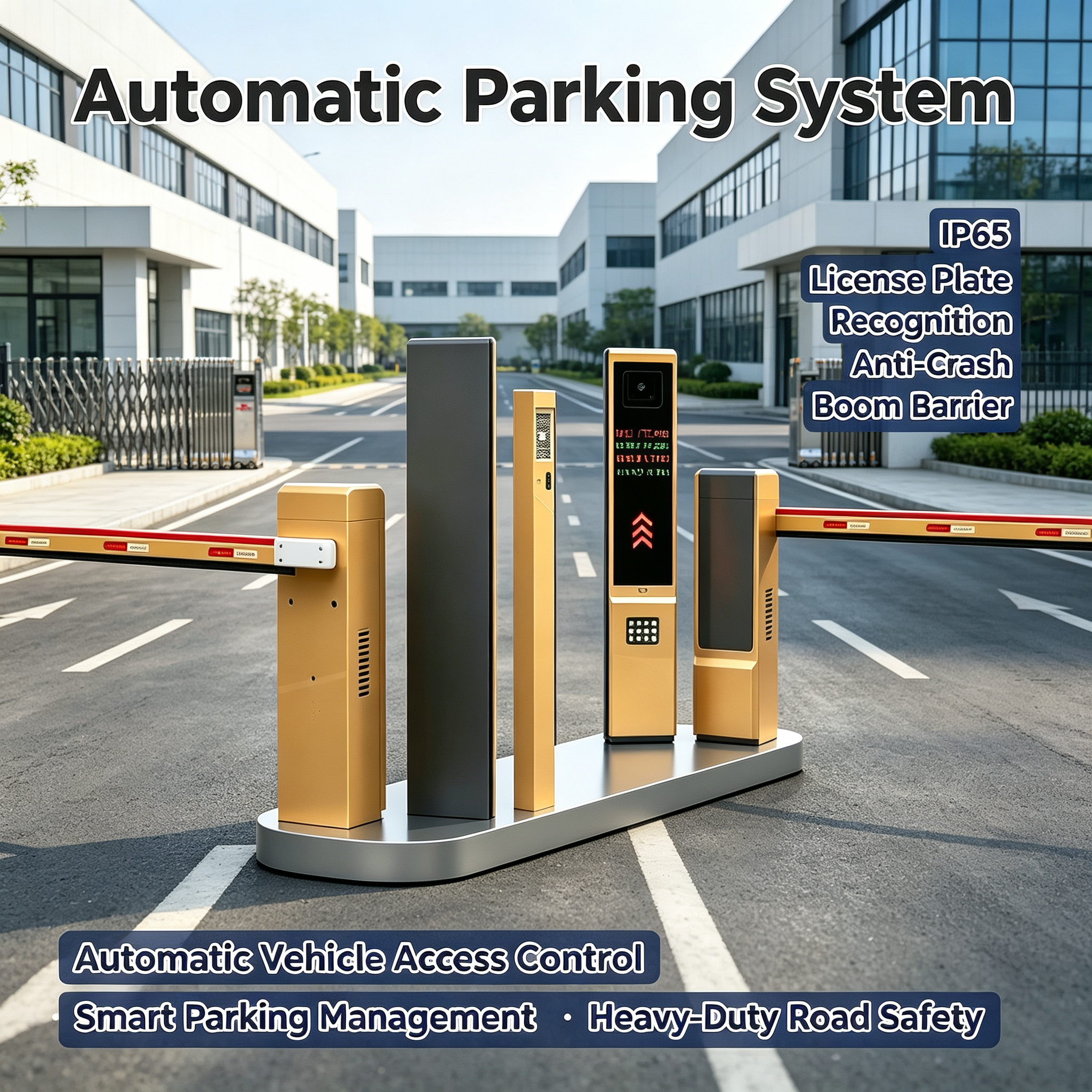
Start by identifying the installation site: a gated apartment complex, an office building, a shopping center, a factory, a warehouse, a hospital, an industrial park or a public parking lot. Each site has a different traffic pattern. A residential entrance may have peaks in the morning and evening, while a logistics center or factory may receive heavy vehicles throughout the day.
Record at least the following:
- The number of entry and exit lanes.
- The estimated number of vehicles per hour at peak time.
- The vehicle types: motorcycles, cars, vans, buses or trucks.
- Whether the barrier operates during office hours only or 24 hours a day.
- Whether one-way or two-way operation is required.
- Whether integration with a guardhouse or an existing parking system is needed.
Do not choose a model on the basis of the daily traffic figure alone. The vehicle rate during the busiest period and the open-close cycle time are more useful for determining system capacity.
2. Determine the Boom Arm Length and Type
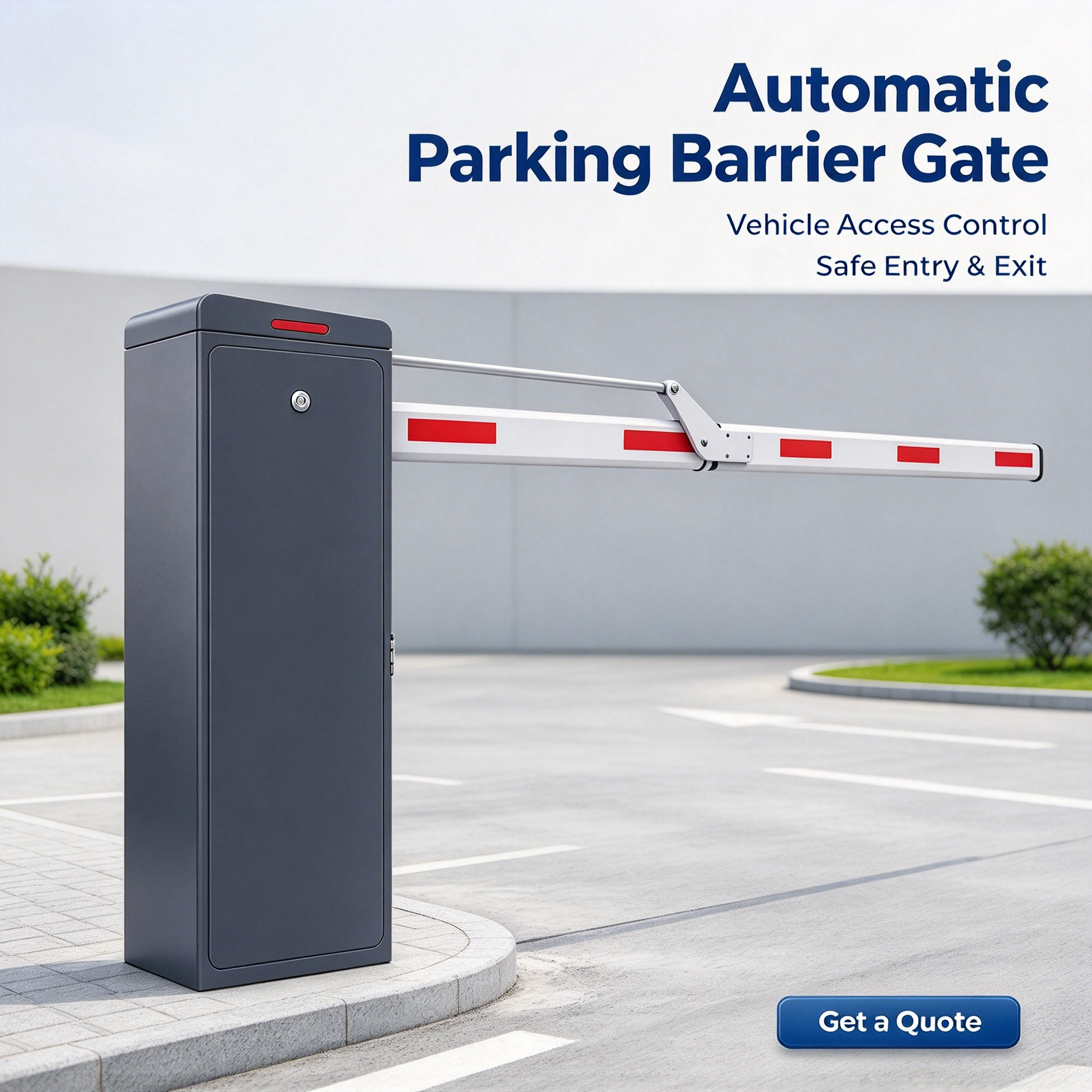
Measure the clear width of the lane that needs to be controlled, including space for the cabinet, the mounting base, lane dividers and the pedestrian route. The boom arm length should cover the lane width correctly without blocking an emergency route or other movement space.
BAROXON lists straight, folding and fence arm configurations on selected models in its range. The YH-PDPY601 product page states length options of roughly 1 m to 6 m, subject to the model configuration and customisation. The maximum usable length should therefore be confirmed against the installation drawing and the data sheet of the actual model.
Consider the following options:
- Straight arm: suitable for open lanes with sufficient vertical clearance.
- Folding arm: useful where there is a height restriction, for example a multi-storey parking lot or basement entrance.
- Fence arm: can be considered for lane control that needs a more complete physical barrier, where it suits the site design.
Also check the cabinet height, the clearance between the arm and the ceiling, the position of any support post and the swing space when the barrier opens.
3. Check the Motor, Duty Cycle and Operating Frequency
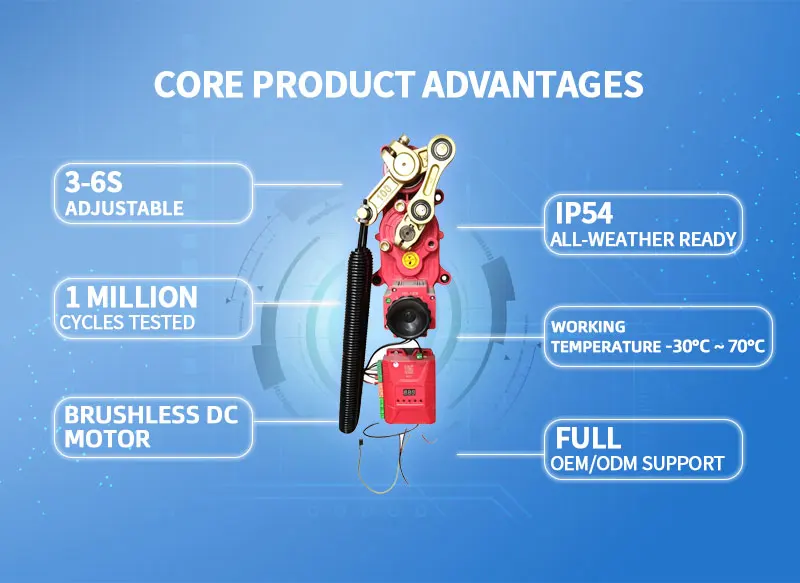
The motor type affects movement smoothness, noise, maintenance requirements and suitability for high traffic. Within the BAROXON range, motor options listed on some models include 24V DC brushless, AC and servo motors. Do not assume every motor option is available on every model; ask the supplier to confirm the configuration being offered.
Check the duty cycle or working rate. For an entrance that operates frequently, choose a system rated for the actual usage pattern. Some BAROXON product pages list 100% / continuous operation or up to 5,000 cycles per day for certain configurations. These figures are not an automatic guarantee for all models and must be verified on the data sheet of the selected product.
Ask the supplier to state the motor type and voltage, the duty rating, the recommended number of daily cycles, the MCBF value if published, and the maintenance requirement.
4. Choose a Suitable Opening and Closing Speed
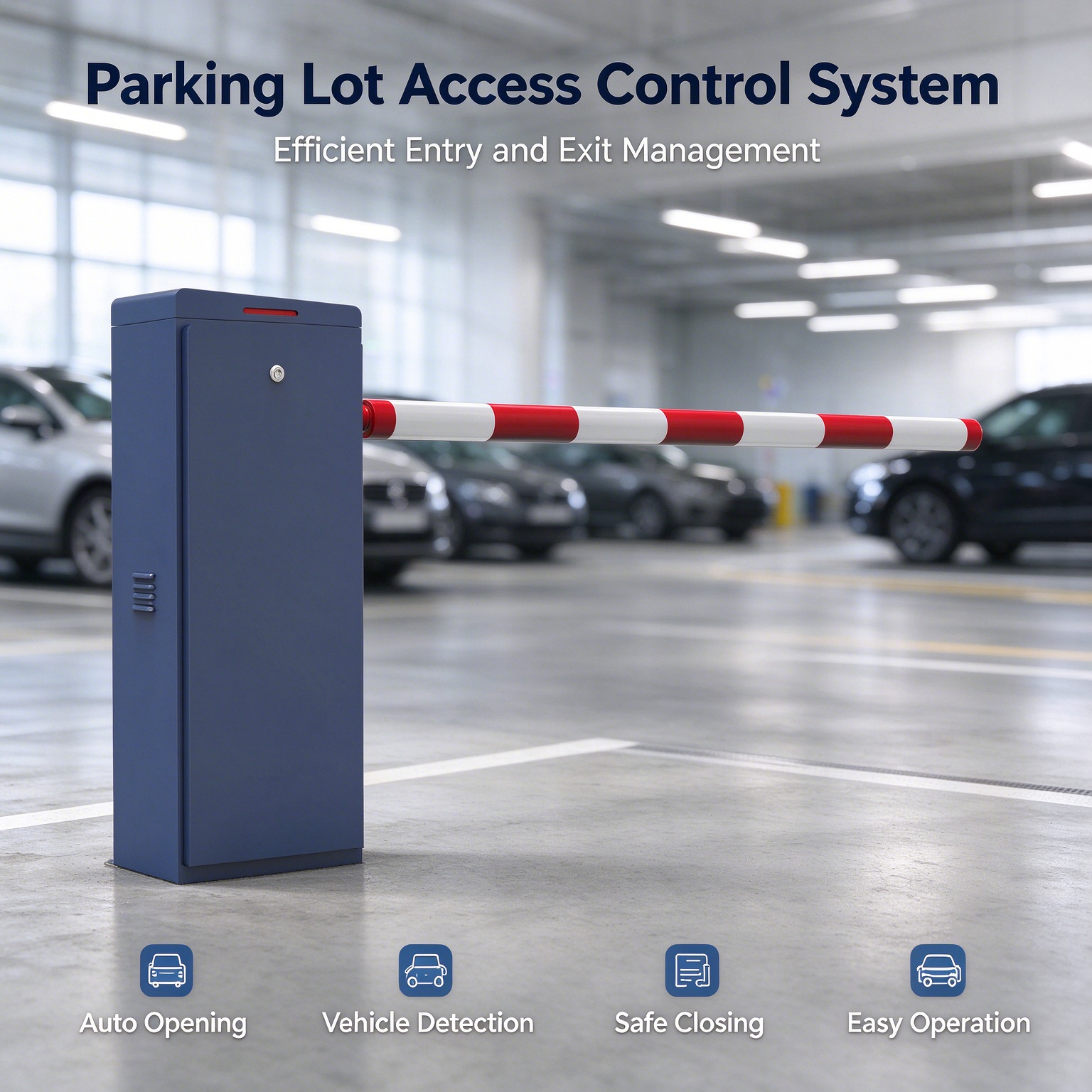
Barrier speed has to balance traffic flow, safety and boom arm length. An arm that is too slow can cause vehicle queues, but a setting that is too fast without a risk assessment can increase the danger to vehicles and road users.
For certain YH-PDPY601 models, BAROXON lists speed options such as 0.6 seconds, 0.9 seconds and an adjustable range of 1.5-6 seconds. The actual value depends on the configuration, the length and weight of the boom arm and the controller settings. In the specification document, state clearly whether the required time refers to opening time, closing time or a complete cycle.
5. Check the IP Rating and Weather Resistance for Malaysia
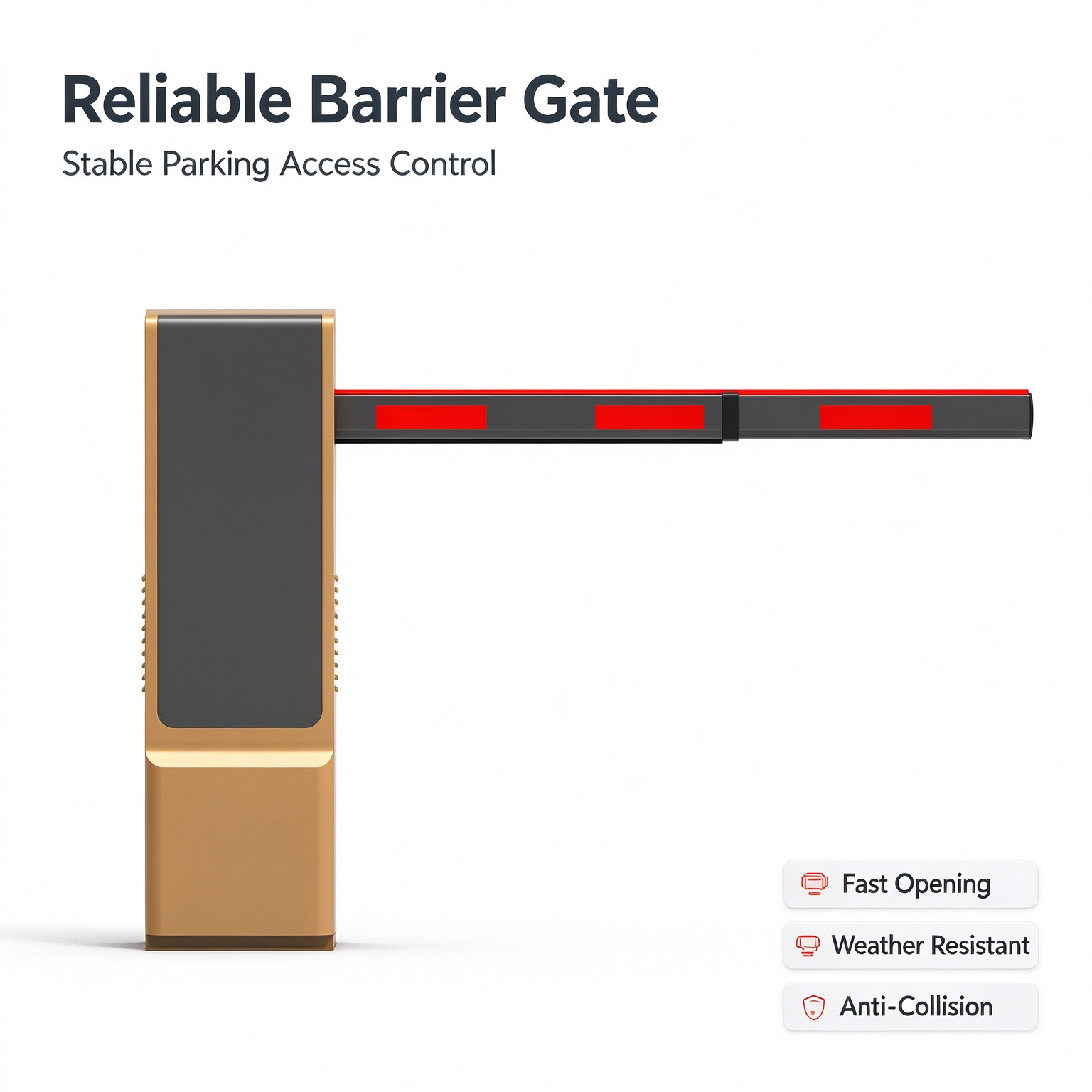
For outdoor installations in Malaysia, the barrier cabinet has to suit exposure to rain, dust, humidity and sunlight. Check the Ingress Protection (IP) rating of the complete unit, not just one electrical component inside the cabinet. BAROXON lists IP54, IP65 and IP66 options on some YH-PDPY601 configurations. Other products may carry a different rating, for example IP55. Set the minimum protection level according to the actual location and verify the rating of the model being offered.
Beyond the IP rating, check the cabinet material, coating finish, corrosion protection, cable sealing, water drainage and the way the base is mounted. For coastal areas or corrosive industrial environments, request written confirmation that the material and finish are suitable.
6. Specify the Detection System and Safety Features
Safety should not depend on the mechanical arm alone. Establish how the system detects a vehicle standing under the boom arm and how it responds when an obstruction is present. Depending on the model and system arrangement, the options to evaluate include the vehicle loop detector, radar sensor, photocell or photoelectric beam, and the auto-reverse or anti-crush function.
Ask the supplier to explain which sensors are included and which are optional, the mounting position and coverage area of each sensor, how the system reacts when a sensor detects an obstruction, the safety test method during commissioning, and the manual operating procedure when the power supply fails. Do not assume every sensor or safety function is supplied as standard on every model.
7. Confirm Compatibility with RFID, UHF and ANPR/LPR
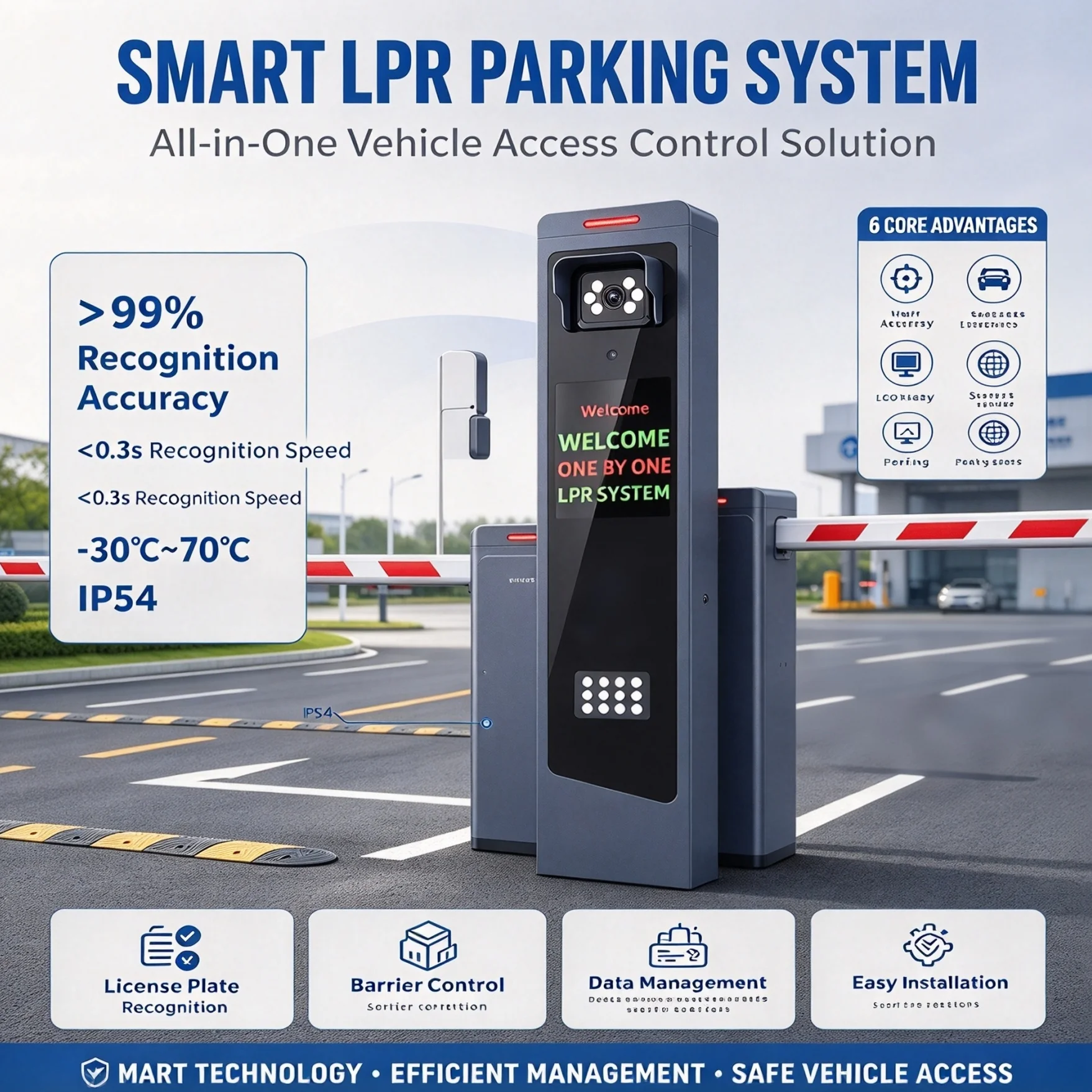
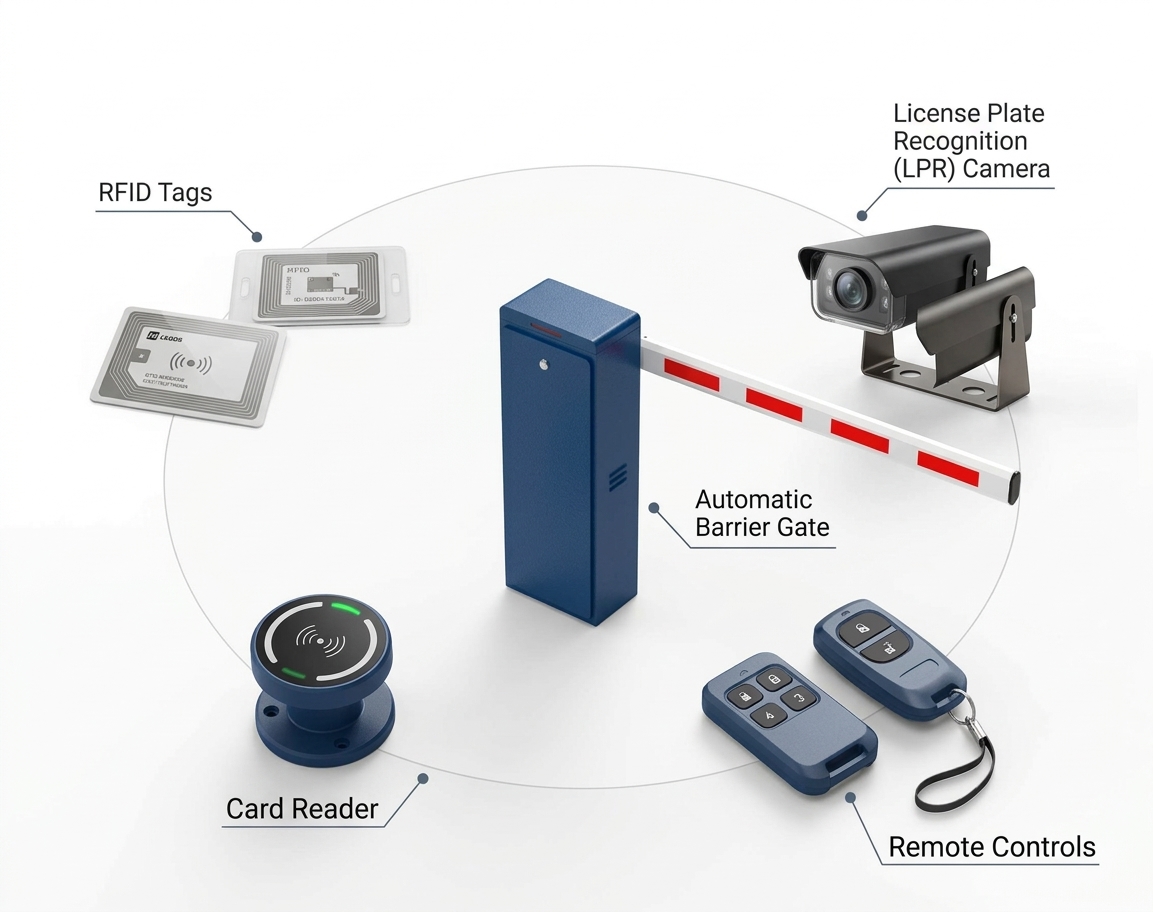
An automatic boom barrier is usually part of a vehicle access control system. Before fixing the specification, identify the user verification method required, such as RFID cards, long-range UHF tags, QR codes, remote controls, intercom, or vehicle registration number recognition through ANPR/LPR.
BAROXON offers product categories related to Automatic RFID Boom Barrier and ALPR/LPR Car Plate System. Some product pages also state options for RFID, UHF, ANPR/LPR camera integration and communication interfaces such as RS485 or TCP/IP. The protocol, software license, additional hardware and compatibility with third-party systems must still be confirmed for the specific model and project.
8. Review the Power Supply, Interfaces and Installation
Make sure the on-site power supply matches the requirement of the model. Some BAROXON models list 24V DC, 110V AC or 220V AC motor options depending on the configuration. Request the exact wiring diagram and data sheet instead of making assumptions from the product name alone.
Check the control input and output types, including dry contact, RS485 or TCP/IP where integration is required. Determine the position of the control cabinet, the power and data cable routes, circuit protection, earthing, drainage and the concrete foundation. If the project needs a backup supply, state whether a backup battery is supplied, optional or must be provided separately.
9. Assess Maintenance, Spare Parts and After-Sales Support
The cost of ownership is not only the purchase price. Consider the service frequency, spare parts availability, technical support response time, ease of opening the cabinet and access to the components that need servicing. Ask the supplier to provide a recommended spare parts list and a periodic inspection schedule.
If the manufacturer publishes an MCBF or MTTR value, check the definition, the model tested and the operating conditions behind that figure. Some YH-PDPY601 configurations list MCBF options of 3 million, 5 million or 10 million cycles, and an MTTR of less than 30 minutes. These values should be read as data for a particular configuration or model, not as a guarantee for every unit or every site condition.
10. Request Technical Documents and Acceptance Testing
Before confirming an order, request the following documents for the proposed model:
- The technical data sheet and the exact model number.
- Dimensional drawings of the cabinet, the boom arm and the mounting base.
- The wiring diagram and the list of input and output terminals.
- Information on the motor, power supply, duty cycle and speed.
- The IP rating and the related supporting documents.
- The list of safety sensors and accessories included.
- The list of supported communication protocols and integrations.
- The installation, operation and maintenance manual.
- The warranty terms, spare parts and after-sales support.
- The on-site acceptance test (SAT) procedure.
During acceptance testing, check open and close operation, vehicle detection, response to an obstruction, access control function, software integration, manual operation and recovery after a power interruption where relevant. Record the test results and obtain sign-off from the responsible party.
11. Use a Specification Checklist Before Requesting Quotations
The following table can be used as a summary of requirements when sending a Request for Quotation (RFQ) to a supplier.
| Item | What needs to be stated |
|---|---|
| Site | Condominium, office, shopping center, factory or industrial park |
| Traffic | Estimated vehicles per hour and daily cycles |
| Lane | Lane width and number of lanes |
| Boom arm | Straight, folding or fence; actual length |
| Motor | Motor type and supply voltage |
| Duty cycle | Required operating rate and daily cycles |
| Speed | Required opening and closing time for the actual boom length |
| Protection | IP rating suited to the location |
| Safety | Loop detector, radar, photocell, auto-reverse or related features |
| Access control | RFID, UHF, QR, ANPR/LPR or remote control |
| Communication | Dry contact, RS485, TCP/IP or the required protocol |
| Power | Main supply, earthing and backup power if required |
| Service | Warranty, spare parts, training and technical support |
| Documents | Data sheet, drawings, manuals and test reports |
Do not simply ask the supplier to tick "compliant". Require the values, model, accessories and exclusions to be stated clearly so that the offers can be compared fairly. You can also review the BAROXON boom barrier and parking access product range to check which configurations are available before the RFQ is issued.
Frequently Asked Questions
1. What is the most important specification for an automatic boom barrier gate?
The main specifications include the boom arm length and type, motor type, duty cycle, opening and closing speed, IP rating, safety sensors, access control method, power supply and communication interface. The priority depends on the traffic and the site conditions.
2. Is a 24V DC boom barrier suitable for every location?
Not necessarily. A 24V DC motor can be an option for certain configurations, but suitability has to be assessed against the boom arm length, operating frequency, power supply, safety features and project requirements. Ask the supplier to confirm the specific model.
3. What boom arm length can be selected?
Some BAROXON models list a range of roughly 1 m to 6 m, but the suitable length depends on the model, the arm type and the installation conditions. Measure the lane width and check the technical drawing before placing an order.
4. Can an automatic boom barrier be connected to RFID or ANPR?
Yes, BAROXON offers related RFID and ALPR/LPR solutions. However, the compatibility of the camera, reader, controller, software and communication protocol has to be confirmed for the product combination actually selected.
5. Which IP rating is suitable for outdoor installation in Malaysia?
The protection level should be determined by exposure to rain, dust, humidity and the surrounding conditions. Check the IP rating of the complete model being offered; do not assume every model carries the same rating.
6. What documents should be requested before purchase?
Ask for the data sheet, installation drawing, wiring diagram, accessory list, sensor information, communication protocol, operation and maintenance manual, warranty terms and the acceptance test procedure.
7. What is the difference between opening time and cycle time?
Opening time is the period from the closed position to the fully open position. Cycle time usually covers a complete open and close cycle, including any delay. Specify which definition applies, because the same arm can give very different figures depending on the measurement method.
8. Should a straight arm or a fence arm be specified?
A straight arm is usually sufficient for open lanes where physical isolation across the full height is not required. A fence arm can be considered where the site needs a more complete barrier against pedestrians or small vehicles crossing the lane. Confirm the swing space and the wind load for the actual arm type.
Conclusion
A sound automatic boom barrier specification starts with an understanding of the site and the traffic pattern, then translates into requirements for the boom arm, motor, duty cycle, speed, weather protection, safety sensors and access control integration. For projects in Malaysia, resistance to the tropical climate and ease of maintenance also deserve attention.
Before making a decision, compare the offers on the basis of the same model number and the same technical documents. Make sure every key value is confirmed in writing and matches the configuration that will actually be supplied.
Latest News
Baroxon® | Leading Boom Barrier Manufacturer
Advanced Security Access Control and Intelligent Parking Solutions.
Company Strength
Adequate Inventory
Fast Shipping
Our Products
CONTACT US
Address: No. 2 Wanshou Road, International Innovation Industrial Park, Jinan, Shandong, China


© COPYRIGHT 2025 Baroxon® | Leading Boom Barrier Manufacturer



Contact Us
Our passion is to bring your ideas to life. Work with our design team to create a one-of-a-kind custom finish or cladding system to create a truly unique space. Together we can make your story stand out. If you need something to request a sample, request pricing, or request a demo, please fill out the contact form below. Explain your request in as much detail as you can and a representative will contact you within 1 business day.